
Executive Director of Columbia University’s Miller Theater Melissa Smey talks to Daniele Sahr
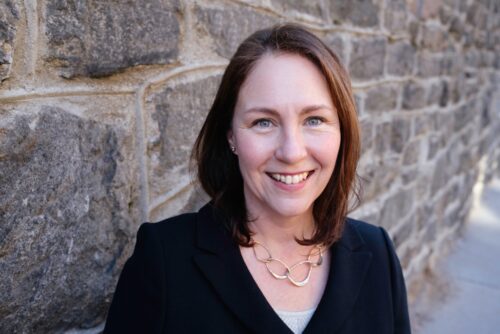
Melissa Smey, the Executive Director of Miller Theater at Columbia University, brings her collaborative spirit and production expertise to putting on some of the best music series in New York City. It might take listeners a few extra subway stops to make it uptown, but the artistic excellence they will find cannot be overstated. I got to speak to Melissa Smey in this 26th season of their signature series, ‘Composer Portraits’, about the curatorial process and her take on what makes contemporary music welcoming to audiences.
Daniele Sahr: February 2026 will be your 25th anniversary of working at Miller Theater. What brought you to this role and fueled your dedication?
Melissa Smey: I always knew I wanted to work in a campus presenting organization – that was my dream job! At the University of Connecticut as an undergrad, I started working in the box office of the campus recital hall, and made programs for senior recitals, worked on a film series and even wrote press releases. I loved it! It was an amazing dream to be at Columbia University and on a campus in New York City. I became the Director of Miller Theater in the spring of 2009. My first ‘Composer Portrait’ was the Helmut Lachenmann 75th birthday celebration. For me, it has been about artistic excellence, personal collaboration and working with artists on shared goals.
DS: Has being on a university campus helped Miller Theater’s series, like ‘Composer Portraits’, thrive?
MS: Yes. 100%. The thing that I love about being here is the spirit of inquiry that’s an essential facet of campus life. There’s a curiosity, a commitment to learning. I am personally curious at heart; I’m an enthusiast and lifelong student of things. And I love being surrounded by people who share that as a core value.
DS: Do you find you have a different kind of freedom in programming then, say, at Lincoln Center?
MS: Being at a research institution where the research itself is valued – the idea of the discovery of new things – I think that does help. So does knowing that the Columbia Department of Music is one of the oldest in the country and that innovation in the arts and in music has really deep roots. Arguably, the very first ‘Composer Portraits’ that ever happened were part of the Ditson Festival of Contemporary American Music in the late 1940s and 50s. There was an all-Charles Ives evening here. Central Park in the Dark and The Unanswered Question premiered on our stage. The space was then named the McMillen Academic Theater, but it was this building on that stage.
We think of ‘Composer Portraits’ as a modern series – we did the 25th anniversary of the series last year – but the truth is that innovation and a commitment to living composers goes years back with the likes of Martha Graham and Isamu Noguchi. We are in a continuum with that history.
DS: What is central as part of planning ‘Composer Portraits’?
MS: For me, a central tenet is commissioning new work – looking back at history and seeing that really important works of contemporary music had their first listening here. That’s something forward-looking that Miller can contribute uniquely to music.
I love the series because it’s a way to immerse yourself in the work of one composer. When it started (the 1999-2000 season), it was borrowing from a visual art model – the retrospective. You could hear a breadth of works over the span of an established composer’s career. But one evening of music isn’t enough to hear the full variety.
There were two shifts I made right away. First, it had to be a living composer and one who could be present because I wanted to have an onstage chat right after intermission. Before, the format had been a pre-concert discussion, and attendance was mixed, I think, because if it was a composer that you didn’t know or didn’t know the music, you didn’t have the same kind of connection. Whereas if you hear the first half of a program and then get to see the composer on the stage and hear from him or her, there is a deeper engagement for audiences – it’s the idea of demystifying classical music, putting creators front and center.
Also, Columbia was 100% uptown music – in terms of New York City – at that time. For the series, I wanted a range of things. It was important to have composers from different countries working in different styles. I didn’t want to be the woman director who was ‘programming women composers’, but I did think there needed to be more representation of the kinds of people who are composers.
DS: Take us into the commissioning process, which you’ve said is a central focus of the series.
MS: We are doing commissions every year at Miller. And not just in the ‘Composer Portraits’. I’ve been commissioning, fairly regularly, contemporary works for the ‘Early Music’ series. Nico Muhly wrote a piece for the Tallis Scholars, as has Matthew Martin. We haven’t announced it yet, but we are going to have a new commission next year for Stile Antico, another early music group. That is really about finding a connection. Those groups’ specialty is Renaissance vocal polyphony and finding a [living] composer who can understand how they work is more nuanced. Making a love connection between the ensemble and the composer is interesting.
There used to be a sense that the commission itself was the most important thing and not whether the piece would have longevity. I think that both are important. What I appreciate most about commissions is that the ensembles are taking the pieces to other places as part of the repertoire.
DS: What would be an example of how you make a match?
MS: I was talking to the ensemble Yarn/Wire about what they wanted, what was on their wish list. They had a lot of shorter pieces which could be hard for them to place in a program so they were very interested in an evening-length work. And they had an opportunity to be working with Michael Gordon, so we were able to collaborate to make that happen.
In the 2025-2026 season, Yarn/Wire wanted a piece where Andrew McIntosh would be in it with them – it would be five of them. It’s nice to be able to make that happen and support that artist vision. And the piece was glorious!
DS: The work you mention is called Anadiplosis, and I was there. The percussion with two pianos and viola created an extraordinarily unique listening landscape. Speaking of ensembles, how do you build those relationships for Miller?
MS: We’ve made a virtue of supporting New York’s new music scene. We have deep collaborative relationships with local ensembles which is important. 20 years ago, there was a sense that the best new music was happening in Europe and that European ensembles were the very best in the world, which they are… But we had a lot of homegrown talent that was the artistic equivalent and just needed a platform for them.
I’m proud of the role Miller has been able to play in supporting those groups, like So Percussion, Alarm will Sound, Ensemble Signal, International Contemporary Ensemble, Yarn/Wire and the Jack Quartet. To be dedicated to them in their home and give them that platform is very rewarding.
DS: Do you try to balance emerging, established and mid-career composers?
MS: You probably saw the photo exhibition of composers that we have in the lobby. There are pictures of Caroline Shaw and Annea Lockwood from the same season which encapsulates our spirit. On the one hand, you have the youngest-ever winner of the Pulitzer Prize for Music and, on the other, an artist who was 80 when she had her ‘Composer Portrait’. I love that.
DS: You often speak about the importance of building community. Is there a uniqueness at Miller Theater in the busy music landscape of New York City?
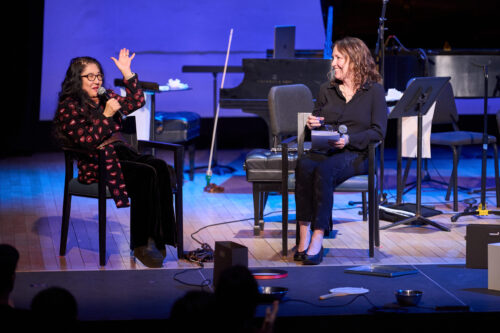
MS: We have the nicest audience! Dedicated. But in 2012, I started a new series called ‘Pop-Up Concerts’ (free, monthly, hour-long concerts) that put the performers and audience on stage together. The focus is on bringing people together and having artists talk about what they chose to play and why. It’s low stakes. It was a great innovation because it allowed me to work with new ensembles – like a first date. I don’t book anyone unless I have heard them in person multiple times. If it works out, then the heavy lift of a ‘Composer Portrait’ can make sense.
Because we are in New York, I want to create unique experiences that people can only have here. There is no point in being the third-best recital series because you can have the best of everything in New York. That is why new work and commissions are so important when helping people find a foothold. And to try to make it feel friendly and welcoming – it’s okay not to know, it’s okay to ask questions. Classical music should be for everybody. It is not just for special occasions when you need to get dressed up. Everyone should be comfortable, and that is important.
DS: There are three more ‘Composer Portraits’ in the 2025/26 season. What should we be excited about?
MS: We will have a chance to hear new music from all three. Lisa Bielawa’s portrait will have her performing in it, showing both sides of her creative practice. Her new piece will eventually be developed into an opera, and she is exploring some ideas. I’ve known Lisa for more than 20 years. Next month, it’s Chinary Ung, who is a DMA grad from Columbia in the 1970s. He’s had an incredible career as a composer and educator and has mentored hundreds of composers. For this portrait, we are working with the Del Sol Quartet from the West Coast. Miller doesn’t often have the opportunity to work with ensembles outside of New York because we have a modest budget, but we made it work. Del Sol has worked with Chinary closely over the years. And the amazing Hannah Kendall! She now has an enormous international career; she will be premiering at Dutch National Opera right before our ‘Composer Portrait’, and I feel lucky that we had an opportunity to get to know her before she becomes too busy to visit us.
DS: You are so passionate about the projects and deeply involved in their creation. How does it feel when a ‘Composer Portrait’ is finished?
MS: With my first concerts, I would be a little bit sad after because I loved them so much and didn’t want that to be the end. Then I realized it doesn’t have to be – you can work together again on something else. What project will we do next? We have done that! For example, Vijay Iyer is a composer who has been featured on our jazz series multiple times. He’s so prolific that we did a ‘Composer Portrait’ and then worked together on a pandemic podcast.
DS: Is there that ‘unicorn project’ you are still chasing?
MS: We can’t work with Mozart, but we can work with ‘fill-in-the-blank’ composers at Miller Theater. When people are putting their heart into something, audiences can tell. We devote five days in the space to give the musicians time for dedicated rehearsals with the composers. There is an invaluable opportunity for that firsthand experience with the highest levels of musicianship. Then they go forward and pass it on to their students, which is critically important. I want to offer a space that helps everyone make their best work, and I want musicians to love it because audiences can tell. Music has been super-important in my life, and I love having made a life in music. I want everybody to feel the same way – to love it as much as I do.
DS: Thank you for taking the time to speak to me and sharing your inspiring vision with Seen and Heard International.
Daniele Sahr