
A Celebration of Giles Havergal: Citizens Theatre, Glasgow, 1.3.2026. (JH)
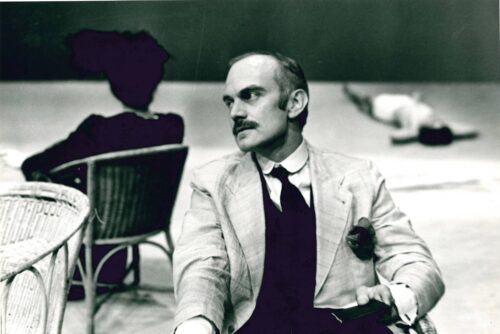
The newly restored Citizens Theatre in Glasgow was filled on Sunday with affection, admiration and a fair amount of laughter as friends, colleagues and admirers gathered to celebrate the life of Giles Havergal, the artistic director who led the theatre for 34 years from 1969-2003 and helped transform it into one of Scotland’s most influential cultural institutions.
Havergal, who died in August 2025 aged 87, ran the Citizens alongside co-directors Robert David MacDonald and Philip Prowse in a famously productive triumvirate that shaped the theatre’s reputation from the late 1960s onwards.
The memorial afternoon — hosted by actors Gavin Mitchell and Maureen Carr — brought together performers, technicians, former colleagues and family members to recall the energy, discipline and imagination that defined his career.
Current artistic director Dominic Hill opened proceedings with warm recollections of his friendship with Havergal and the wide-ranging theatrical conversations they shared over the years. The gathering carried an added poignancy: Havergal died on the day the Citizens reopened after its long restoration and never saw the revived building that stands as a testament to the theatre he helped make famous.
Actor David Hayman recalled the ‘theatrical earthquake’ triggered by Havergal’s audacious 1969 production of Hamlet, in which the prince of Denmark was portrayed as the ‘village idiot’ of Elsinore. The production provoked boos as well as cheers but signalled the arrival of a new theatrical boldness in the Gorbals. Under Havergal’s leadership, Hayman said, the Citizens became a place of fearless experimentation and exhilarating creative freedom.
Former general manager Paul Bassett offered a glimpse of Havergal’s distinctive combination of artistic vision and practical discipline. He believed passionately that the Citizens belonged to the people of Glasgow, greeting audiences at the door before performances while keeping a watchful eye on box-office figures and budgets.
Other tributes illuminated the man behind the formidable reputation who never lost his sense of fun. Ciarán Hinds read movingly from Thomas Mann’s Death in Venice, a piece Havergal himself often performed, while Mitchell delivered a passage from Havergal’s Olivier award-winning adaptation of Graham Greene’s Travels with My Aunt, capturing his distinctive theatrical cadence. Composer Patrick Doyle remembered an exacting but generous mentor, and Havergal’s goddaughter Georgia Graham spoke of the warmth and discipline that shaped his private life as much as his professional one.
The afternoon returned repeatedly to a central point: while many great theatrical figures — Trevor Nunn, Laurence Olivier and Peter Hall among them — presided over London institutions, Havergal achieved something remarkable in Glasgow during his 34 years. By the 1970s the Citizens Theatre had become internationally renowned, proof that daring theatre could flourish far beyond the capital’s cultural orbit.
As the audience rose in sustained applause, the mood was both celebratory and reflective. Havergal was remembered not simply as a director of productions but as the architect of a theatrical culture — one rooted in ambition, discipline and an enduring belief in the power of theatre to belong to everyone.
In his honour the Citizens Theatre has established the Giles Havergal Memorial Fund (here), supporting artistic development, innovation and inclusivity.
Jane Havergal