
 United Kingdom Various: Roderick Williams OBE (baritone), Christopher Glynn (piano). Lighthouse, Poole, 29.4.2026. (CK)
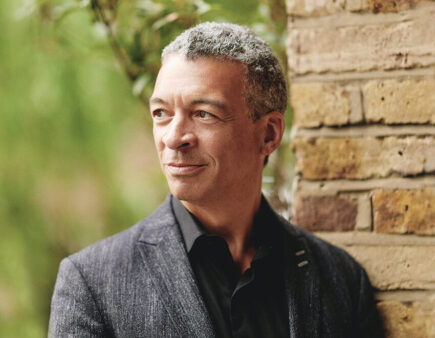
Back in October Roderick (Roddy) Williams helped to launch the Bournemouth Symphony Orchestra season – and his own season with them as Artist-in-Residence – by taking part in a magnificent performance of Zemlinsky’s Lyric Symphony, with the orchestra’s Chief Conductor Mark Wigglesworth. It was a joy to welcome him back as the season draws to a close, with the platform – which had been bursting at the seams for Zemlinsky – to himself and his superb pianist Christopher Glynn.
Williams has described his wonderful An English Song Winterreise as ‘an exercise in association’; during the year in which he was preparing Schubert’s cycle, to quote Andrew Burns’s excellent and detailed programme note, ‘various English songs came to mind as having some kinship with either the music or the words of Schubert’s masterpiece’. In Williams’s own words, ‘I wanted to build myself a parallel song recital that would help me to embed the original.’
Williams is keen for listeners to work out the connections for themselves, and doubtless there were many Schubertians in the audience (large – Williams said ‘I’ve never given a solo recital to so many people’) who were enjoying doing just this: but the retired English teacher in me was revelling in the sequence’s treasure trove of English poems and the variety of invention with which the cavalcade of composers rose to the challenge of setting them to music.
Although certain poets and composers appear to predominate – Hardy has seven of the 24 poems, five of them set by Finzi – it would be a mistake to make too much of this: whereas in Winterreise Schubert set the words of a single poet, Wilhelm Müller, Williams’s curated collection accommodates a variety of poets within a certain harmony of mood. Even more so among the composers, from the quirkiness of Elizabeth Maconchy to the full-blown Elgarian Romanticism of the famously reactionary Humphrey Proctor-Gregg.
None of this would matter, of course, were it not for the consummate artistry of Williams himself. Rarely can such beauty of voice have been married to such intelligence, subtlety, sensitivity, call it what you will, in imparting meaning and expressing feeling: all this along with a complete absence of pretension and an ability to communicate with an audience through words both sung and spoken. His is an art that overcomes barriers.
Highlights? I very much enjoyed the free-ranging lyricism and ardour of Roger Quilter’s Blow, Blow, thou Winter Wind, and the onomatopoeic piano in Madeleine Dring’s Weep You No More, Sad Fountains (a good match, as Andrew Burn noted, for Schubert’s Gefror’ne Tränen). Vaughan Williams’s setting of William Barnes’s Linden Lea was sung in Dorset dialect (as Williams noted, ‘We are here!’). Parry’s setting of Nightfall in Winter was hypnotically beautiful; Glynn’s piano playing in the following settings by Finzi and Gurney suggested an undertow of turbulence, a troubled mind. Finzi’s In the Mind’s Eye brought us close to Housman country (interesting that Williams found no room for one of the many Housman settings by English song composers).
Lights Out brought us the best of Edward Thomas and Ivor Gurney: Gurney’s choice of three of the poem’s five stanzas stripped the poem of its pictorial elements and underlined its uncompromising bareness, Glynn’s brief epilogue ending unresolved, unexpectedly cut off.
I found the wistful lyricism of Williams’s own Blake setting The Angel (written when he was 15, he told us), with its haunting piano introduction, very affecting; as also, in a different way, Written on Terrestrial Things, Judith Weir’s witty setting of Hardy’s The Darkling Thrush: the piano keeps up the bird’s ecstatic carolling throughout, while the singer seems too busy with his bleak requiem for the departed century to notice. Quite an achievement to make an (almost) comic song of it!
In Come unto these Yellow Sands Williams enacted Tippett’s light-winged Ariel brilliantly, Glynn’s piano cavorting as though Weir’s thrush was still singing. Doreen Carwithen’s Echo was fragile, haunting, before the warmth and candour of Vaughan Williams’s Whither Must I Wander?
And so to the final two songs. Finzi’s evocation of the cold distance of the star in Waiting Both was a fine match for Schubert’s Die Nebensonnen, Williams making clear the significance of ‘Till my change come’. But how to finish? How to match the blanched emotional numbness of Schubert’s Der Leiermann?
I have not been greatly taken with the little of Errollyn Wallen’s music that I have heard, but Williams’s choice of her Peace on Earth was something of a revelation. It is a carol, but its cold winter scene is shorn of the usual seasonal and sentimental trappings, glancing only briefly and obliquely at the Christmas story (‘grace’, ‘Hear them singing’). A plea for peace rather than a celebration: I found it apt, and moving.
À propos this song in his introduction, Williams asked if anyone had been with him at Hiroshima (in 2006 he and the Bournemouth Symphony Chorus had taken part in a performance of Britten’s War Requiem there). He did not pursue the point; but it had me thinking, is this a carol that you could perform there, with its history? I think you could. Williams’s encore (more of a postlude) – Schubert’s Wandrers Nachtlied – was in perfect consonance with it.
A word of thanks to the BSO for providing such a well-produced booklet with all the texts in full: it enhanced our enjoyment of a performance which I think we all felt was special. If Roderick Williams gives further performances, catch one if you can.
Chris Kettle
Vaughan Williams – The Vagabond, Linden Lea, Whither must I Wander?
Quilter – Blow, Blow, thou Winter Wind
Dring – Weep You no More, Sad Fountains
Finzi – At Middle-field Gate in February, In the Mind’s Eye, The Too Short Time, In a Churchyard, Waiting Both
Bridge – Tears, Idle Tears
Parry – Nightfall in Winter
Gurney – On the Downs, Lights Out, The Folly of Being Comforted
Boyle – A Song of Enchantment
Britten – Midnight on the Great Western
Williams – The Angel
Weir – Written on Terrestrial Things
Tippett – Come unto these Yellow Sands
Maconchy – The Wind and the Rain
Carwithen – Echo
Proctor-Gregg – The Stormy Evening
Wallen – Peace on Earth