
 United Kingdom Mendelssohn, Mozart, Brahms: Alim Beisembayev (piano), Stuttgart Philharmonic Orchestra / Mariano Chiacchiarini (conductor). Usher Hall, Edinburgh, 18.11.2026. (SRT)
Mendelssohn – Hebrides Overture
Mozart – Piano Concerto No.20 in D minor
Brahms – Symphony No.3 in F
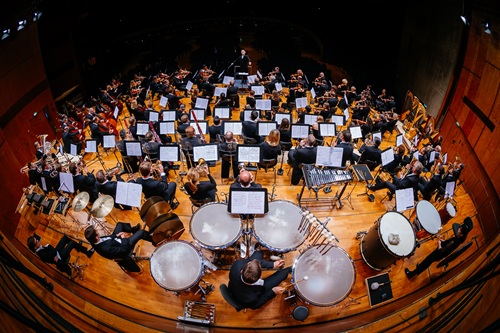
The Stuttgart Philharmonic Orchestra began its UK tour in Edinburgh, and their Usher Hall concert opened with music by another Germany musician who was on tour in Scotland, though in Mendelssohn’s case it was in 1829. The Hebrides Overture proved a very useful window into what the orchestra could do. Their sound is forthright and assertive – close up to the ear, if you like – but it is none the worse for that, and if the winds sounded very prominent in the opening phrases then they receded into the texture as the overture progressed, which might have been conductor Mariano Chiacchiarini’s plan all along. His clipped phrasing and no-nonsense shaping had a nice feeling of back-and-forth to it, with a sense of swell from beneath becoming ever more evident. Fanfares and drumrolls were inked in decisively, and the whole was offset by some lovely liquid solos, none more beguiling than Ute Münch’s solo clarinet.
Brahms’s Third Symphony felt similarly tightly argued, sometimes bracing in its intensity with a first movement full of gutsy sweep and a pleasing sense of climax towards the end of the first movement. The winds in the second movement were so sweet as to be almost naïve, while the melting, golden-brown cellos of the third movement competed for the laurel wreath with Stefan Helbig’s gorgeous legato horn solo. In Chiacchiarini’s hands the finale worked up a terrific head of steam on its way to its shimmering conclusion.
Their Mozart wasn’t quite so cohesive, perhaps due to a mismatch between the drives for drama and delicacy. Pianist Alim Beisembayev made it his mission to pacify the turbulence of the orchestra, often very successfully, by turning in some beauteous lines of legato, particularly in the central Romanze. However, the Sturm und Drang of that movement’s central section sounded rather underplayed, and if they tried to make up for that with a finale of jagged edges and sharp contours, then the wind was rather taken out of their sails by Beisembayev’s overextended final cadenza; an episode that slowed the momentum, hogged the limelight, and ended up detracting from the culminating turn to the major, which should have been the finale’s real dramatic climax.
Simon Thompson
The Stuttgart Philharmonic Orchestra’s UK tour runs until Monday 23 November 2026.