
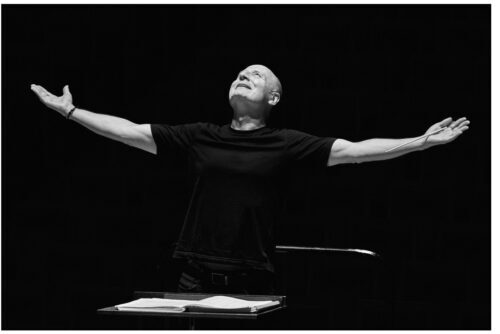
 United States Various: Behzod Abduraimov (piano), Los Angeles Philharmonic / Paavo Järvi (conductor). Walt Disney Concert Hall, Los Angeles, 29.3.2026. (LV)
R. Schumann – Overture, Scherzo and Finale in E major, Op.52
Beethoven – Piano Concerto No.1 in C major, Op.15
Brahms – Symphony No.2 in D major, Op.73
If Paavo Järvi had not already got a new job with the London Philharmonic Orchestra and was auditioning for the open one with the LA Phil, he could hardly have chosen repertoire in which the orchestra is more obviously in need of world-class excellence. With so much personnel change underway, the evening offered a glimpse of what the Phil might become with a conductor who builds orchestras and knows the core repertoire inside out. It was a strong case, but not yet a revelation.
The evening’s best argument was Robert Schumann’s Overture, Scherzo and Finale in the first performance ever by the LA Phil. From the opening chord, one sensed that Järvi knew the score as well as could be and, more importantly, knew how to make the orchestra feel that it knew it too. The layering of the orchestration was totally brilliant. The narrative clarity caught the freshness of the spirit and the exuberance of the writing, and Järvi even got the brass to play with delicacy.
The Scherzo was a little too casual and the syncopation under-characterized, but the trio section glowed, after which Järvi and the orchestra rode the Finale’s big wave to its crest in all its audiophile splendor. The strings were splendid, playing as one with tremendous energy and sheen, and Järvi steered Schumann’s silly middle section and its endless repetitions with as much conviction as anyone could. He took the pompous ending more seriously than it deserved.
Beethoven’s Piano Concerto No.1 in C major began briskly, with lovely, kittenish grace notes in the first violins, fine trumpets and drums and wonderfully woody bassoon playing. Järvi piloted the final flight path into Behzod Abduraimov’s first entry with swagger and open-hearted bravado and could not have set things up better. Abduraimov came in with a gentle lyrical lilt, enjoyed the triplets and a variety of staccatos and showed himself to be a pianist who fully relishes Beethovenian delights. He mimicked the mock heroics of the trumpets and drums and had fun alternating staccato and legato articulation in the repeating triplets. He judged the anticipation before the big upward run beautifully, though the run itself – played glissando – proved a little anti-climactic.
After some playing that was too neat and manicured, Abduraimov came back to life in the cadenza and clearly relished the melodramatic bits. The second movement, alas, was rather unsubtle in the orchestra and short on poetry from the soloist, but the Rondo brought some fine dialogue with the woodwinds. After the first of the brief cadenzas, Järvi suddenly jump-started the orchestra into an entirely new, much faster tempo and raced Abduraimov to the finish line, triggered by a last gorgeous oboe appoggiatura (Marion Arthur Kuszyk). As an encore, Abduraimov tossed off the pearly runs in Liszt’s ‘La Campanella’ with breathtaking ease before beginning to sound increasingly desperate, but perhaps that was what Liszt intended. The crowd went wild.
In Brahms’s Second Symphony Järvi took the first movement repeat, which is always a joy to hear, and along the way an identifiable orchestral sound emerged, its core lying in the burnished gold of the inner strings and brass, with sensitively nuanced, personal playing from oboist Ryan Roberts. After an uncertain opening from the French horns, which would plague them until their eventual triumphs, the Phil sounded like any great European orchestra: confident, eloquent and strong. Yet for all its beauties and excitement, Järvi’s otherwise dynamic and eventful voyage missed that final sense of seeking which depends on a deeper relationship with the musicians and, perhaps, a more compelling vision.
Laurence Vittes