
Robert Beattie learns about the exciting collaboration between Northern Ireland Opera and Diva Opera
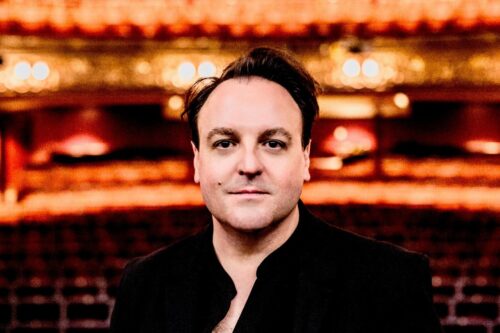
Northern Ireland Opera and Diva Opera have joined forces and will jointly present a new production of Puccini’s La bohème in Belfast later this month. I spoke to the respective directors of both companies, Cameron Menzies and Anne Marabini Young about this production. I also spoke to soprano Mary McCabe about the vocal and dramatic challenges of singing Mimì in the production.
NIO is the only professional company in the country producing full scale work on stage which celebrates and platforms Northern Irish artists, for audiences from their local communities and beyond. They have made quite an impact in recent years both in terms of the very high quality and infinite variety of their productions. They have produced a string of conventional operatic productions including La bohème, La traviata and Tosca which have received glowing reviews from the Press. In addition, they have also produced several successful Broadway musicals including Sweeney Todd, Kiss me Kate, Into the Woods and Follies. Later this year the company will also be running a series of ‘Morning Melodies’ concerts featuring distinguished soloists from their cast of singers.
Diva Opera is Britain’s foremost chamber opera company and was founded in 1996 by Soprano Anne Marabini Young and Music Director Bryan Evans MBE. Since then, the company has given more than 2,500 performances of 50 different operas and concert programmes and has earned an unrivalled reputation within the operatic world and beyond.
Diva gives around 40 performances annually, and they are now ambassadors for chamber opera internationally. Highlights for the company include a performance of La Cenerentola at La Fenice Opera House in Venice in 2004, and the party scene from Die Fledermaus at the Royal Albert Hall accompanied by the Royal Philharmonic Orchestra, with José Carreras and Dame Kiri Te Kanawa as special guests. All the productions are presented in spectacular period costumes and sung in their original language.
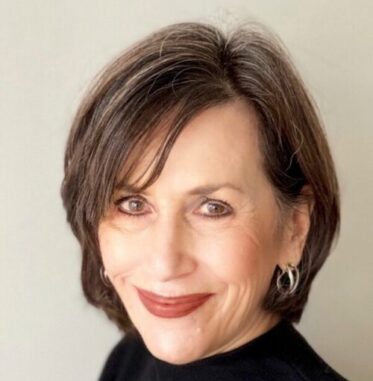
Robert Beattie: We have spoken with Northern Ireland Opera before but not to Diva Opera. Anne, I wonder if you could tell us a little bit about Diva. I understand it is a touring opera company, and you are currently touring with La bohème and La Cenerentola.
Anne Marabini Young: That’s right, we’re a touring opera company but we’re also a chamber opera company. We perform everything with piano accompaniment, and it’s reduced only in that we reduce the chorus but we have all the principal roles. And we perform the whole opera in an ‘in the round’ format with the audience seated on three sides of the performing area at close proximity to the artists. We make the usual cuts in Mozart and Rossini that any opera house would make. But basically, it’s the full opera with the principals and a reduced chorus. We’re now in our 30th year, so we’ve toured extensively during that time. We tour in the UK and France a lot, and we’ve been to Japan, South Africa and Russia before the Ukraine conflict. This is our very first time in Northern Ireland, or indeed in Ireland.
RB: I note that you have a solo piano rather than an orchestral accompaniment. Does that present challenges in terms of trying to achieve certain orchestral sonorities?
AMY: It doesn’t, because our music director, Bryan Evans, trained as a concert pianist. He has a unique ability to orchestrate the piano part. So, he doesn’t just use the vocal score and play the accompaniment. He listens to the recordings, and he brings out various instrumental combinations. Given that we’re a chamber opera company, we usually perform in a much smaller space than the usual grand opera house, and because we use a small space it works extremely well. I think it’s fair to say that the audience sometimes might come along with preconceived ideas about what it’s going to be like just with piano. They forget about that pretty quickly because Bryan orchestrates the whole work so well.
RB: This new production of La bohème is a joint production between Diva Opera and Northern Ireland Opera. What prompted you to join forces?
AMY: Diva Opera has worked with Cameron in the past. He has also directed for us, and we really admire his work. And since he’s been with Northern Ireland Opera, I’ve seen several productions, and I think they’re a fantastic company, producing extraordinary work. A lot of companies are collaborating at the moment so we talked to Cameron about it and said, wouldn’t it be fantastic if we could use your emerging artists and the opera chorus to do a production together in Belfast. And, of course, we have Mary McCabe this year working with us. We thought it would be brilliant to showcase her talents in her own city as well as in a production with somebody else. So, it kind of just grew from that idea, really.
RB: It’s obviously one of the most famous operas in the repertoire. Is there anything that drew you to La bohème at this time?
AMY: With us certain operas just come around after a number of years, and it just seemed the right time for La bohème again. It’s a piece that works very well for us, particularly given that we are a chamber opera company, and we have a much smaller chorus. The story is quite intimate as it revolves around two main characters and their group of friends – there are six main characters in all. Therefore, it lends itself very well to being produced in the chamber opera format. It’s extremely popular: people want to see it multiple times, and we generally achieve good ticket sales. I think it’s a combination of all those factors.
RB: What can you tell us about this particular production?
Cameron Menzies: I went to London the other day to see the dress rehearsal. What Diva do so beautifully – and because it is such an intimate setting – is the way every prop, piece of furniture, costume, wig, shoe and every detail of the production is thought about and is beautifully produced. What I think stands out for me is that it’s almost like a film in front of you. Our budgets are such that we could never produce a La bohème which depicts Paris of the 1890s on a grand scale. Our main stage work is more focused on depicting that period in a more intimate way through detail and in giving the production a contemporary edge. What Diva do so beautifully and so perfectly is create that authentic feeling of the 1890s in Paris, right in front of your eyes.
In terms of why we have chosen this opera, La bohème is one of those operas which has massive audience appeal. Part of our audience development programme is about producing operas that are accessible so that people who are new to opera can come to the production the first time and enjoy it. People who are new to opera will enjoy this production, but it will also appeal to people who love opera. La bohème is easy to understand if you have never been to an opera. The singers perform it in Italian but there are English surtitles so the audience can follow what is going on. It was an important choice for us this year as it opens up a new audience while also appealing to the opera aficionados. For me the real strength of this production is the detail of the costumes including the fabrics used and allowing the audience to experience that up close. Nothing can be faked and Anne spends huge amounts of time with her creative teams making the scenes real and alive.
RB: Are there any themes or messages from the opera that are relevant to today?
CM: Yes, don’t be poor – avoid it at all costs.
AMY: It also resonates today because there’s a character who becomes ill and dies at the end. Anyone can identify with that.
CM: Thematically, it’s really about holding on to what you have a passion for. They’re all struggling artists, trying to find their way in the world. That’s not just a youthful thing – people of all ages are still doing that. The opera is a lovely way to reinforce the message that you should follow your passions at any age and see where they take you and where you end up.
RB: I always think it’s important to flag up the contemporary relevance of opera, particularly given the recent comments from Timothée Chalamet.
CM: You know what I think. As misguided as they were, they’ve done great business for opera and ballet. He should have been asked which operas and ballets he has actually seen to make those comments. At the end of the day, it’s done great business for the opera. It’s put opera and ballet centre stage in the contemporary and commercial world. I think any publicity is probably good publicity at the end of the day.
RB: Yes, a number of people have said that haven’t they. It seems to have increased ticket sales, so I suppose we ought to be grateful to him. Mary McCabe will tell us about Mimì but could you tell us about the rest of the La bohème cast.
AMY: They’re all people that have very strong careers. We have Robyn Lyn Evans in the role of Rodolfo. He’s a Welshman and he’s always busy and sings for many different companies. Jean-Kristof Bouton is singing the role of Marcello. He is French-Canadian who sings internationally, particularly in Romania as he trained there and subsequently worked for Opera Iaşi. He also works in France a lot so he really has a very strong international career, and audiences are going to be thrilled hearing him. Jerome Knox is singing Schaunard; he is another very good young singer with an up-and-coming career. The young bass-baritone, Michael Roche, is singing the role of Colline. He has a very fine voice, and this is probably his first professional job as he left college only last year. He’s a very exciting young talent. Tereza Gevorgyan is singing Musetta. She also has a strong career and has worked for Opera North, Opera Holland Park and Glyndebourne. So, these singers work for many different companies, and then they come to us for certain productions. Matthew Hargreaves sings the dual role of Benoit/Alcindoro. He’s worked for many different opera companies from the Royal Opera House to English National Opera and Opera Holland Park.
RB: It’s marvellous you’ve managed to get such high calibre singers.
AMY: They are indeed very accomplished singers. I think they enjoy this way of working. And it’s often a really good way for them to learn a role because it will be in the original language. We have language coaching, and we have everything that they need. I often say that if they can do this, which is singing ‘in the round’ and very close to the audience night after night, they can do anything. I think going on major opera stages after this is quite easy to be honest.
CM: I agree. I started over 10 years ago now and I worked for Diva; it was great experience for me too, because when I was doing new operas, Diva like them to be done traditionally. That’s not always the case, and it’s sometimes very hard to get a traditional production as a young director. I did Don Giovanni first and then we did Lucia, Figaro and Così all these amazing operas. I got to learn them as a director in a traditional context which is sometimes very hard to do when you are working for other companies. Many companies don’t want that from young directors, or they want a production to really push the boundaries. While I’m absolutely not a purist, I think learning these iconic operas ‘properly’ first really helped me to work creatively and to come up with new concepts and ideas. Learning to work across-the-board with the whole creative team including costumes, lighting, sets and so on is a really important foundation both for experienced artists and young artists coming through as well.
RB: Mary, you’re singing Mimì, which is one of the most iconic roles in the whole of opera. What do you see as its main challenges both vocally and dramatically?
Mary McCabe: Vocally, I’ve been working a lot with Bryan Evans, the musical director, to try and really bring out the text. It’s such a moving story and it’s important to be connected to the text always. There are moments when the music is so beautiful that you want to indulge in that, but it’s important to keep the focus on telling a story. I like to bring out the sweetness of Mimì’s character and to make her believable and relatable. She’s clearly sick and vulnerable but she is also a young person in love. It’s important not to indulge too much in self-pity: as we move towards the end of the opera, we want the audience to feel sorry for Mimì, not for her to feel sorry for herself.
CM: It’s important to remember that, because the audience is so close, the acting has to be spot on and every word has to be genuinely felt. You can’t fake anything. Mary, you mentioned that a gentleman asked you the other day after the dress rehearsal about how to distinguish between when Mimì’s asleep and when she’s dead in the production.
MM: Yes, that’s right. I previously worked on the character of Violetta with Cameron. When we were in rehearsals doing the final scene, Cameron kept saying, ‘remember to breathe, remember to show that you’re breathing because Violetta is not dead yet’. If you’re very still, it can appear like the character is already dead. When it came to Mimì, I thought, there’s a long period where she’s asleep or pretending to be asleep and you almost have to exaggerate her breathing to show this. You then have to make a contrast between this and the final moments of the opera where she is actually dead. The gentleman who asked me about this asked how I managed to convey that so convincingly. I was pleased that he was able to see this detail in the production.
RB: Could you tell us about your future plans?
CM: Northern Ireland Opera has a new production of Carmen in September. This is the start of Diva’s tour and they’re performing Bohème and Cenerentola. In addition to Bohème later this month, we also have a series of ‘Morning Melodies’ concerts. During our residency in the Carlisle Memorial Church, Charlotte Hillier and Joanne Berry of Diva Opera will be giving a behind the scenes Creative Skills talk on the design process for making period costumes and wigs. I’ll leave it to Anne to tell you about Diva’s tour.
AMY: After Belfast we will be going to France as part of our annual tour and we will be performing in a very large theatre. That’s a challenge for us as we have to make everything seem bigger, but we have done it before and it worked exceptionally well. This will be our third time there in the same theatre and they keep bringing us back and sell out every time which is a very good sign. We then have various performances throughout the UK and then we go back to France in August for more performances. The tour goes on until the beginning of November with either one of the operas, so it’s a long run. It’s quite spread out which can be a good thing, but it’s also difficult for the singers because they have to commit to the tour for such a long period of time. We’ll start the process all over again in January with a new set of operas.
CM: That will hopefully be the start of many collaborations between us.
AMY: I really hope so.
CM: Bohème is selling very, very well, which is very encouraging. I think we have about 20 tickets left for the event, so we’ll probably have over 200 members of the audience in the church. We might look at doing another joint production next year because it’s great for our artists. It’s great for our chorus to work with people like Bryan and the director Wayne and it’s a great collaboration between the two companies.
RB: In conclusion is there anything you’d like to add?
CM: I should mention that this collaboration has only been possible because of the Laidlaw Opera Trust. They have been working with us over the last couple of years, and they gave us funding to collaborate, and to create some sort of special relationship with another company. We chose Diva Opera and we are extremely grateful for the opportunity to collaborate with them.
RB: Many thanks for speaking to us today. I’m looking forward to seeing La bohème and the other forthcoming productions.
Robert Beattie
For more about Diva Opera click here.