
 United States Various: Seong-Jin Cho (piano), Mark Inouye (trumpet), San Francisco Symphony / John Storgårds (conductor). Davies Symphony Hall, San Francisco. 22.1.2026. (HS)
Outi Tarkiainen – The Rapids of Life (U.S. premiere)
Shostakovich – Concerto No.1 in C minor for Piano and Trumpet, Op.35
Beethoven – Symphony No.5 in C minor, Op.67
Encore: Bernstein – Rondo for Lifey
Along the way to a distinguished career as a conductor, John Storgårds was a violinist serving as concertmaster of the Swedish Radio Symphony under Esa-Pekka Salonen, the San Francisco Symphony’s most recent music director. Well known in the UK for his cannily balanced programs with the BBC Philharmonic, Storgårds often surrounds highly familiar pieces with works that are completely different.
His debut with the San Francisco Symphony certainly underlined that aspect. An energetic performance of Beethoven’s Symphony No.5 contrasted with the United States premiere of fellow Finn Outi Tarkiainen’s The Rapids of Life which opened the concert. (Tarkiainen’s English horn concerto Milky Ways, a San Francisco Symphony commission, was a standout in its U.S. premiere here in 2023.)
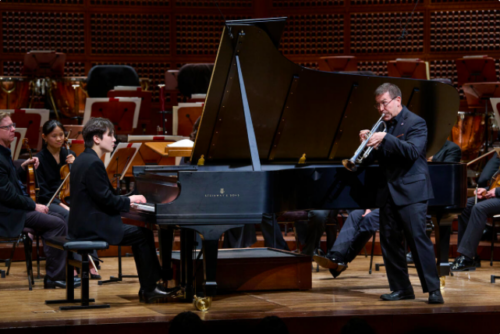
At the center of the program, Seong-Jin Cho, the 2015 winner of the Chopin piano competition, teamed up with Mark Inouye, the orchestra’s principal trumpet, for Shostakovich’s Concerto No.1 for Piano and Trumpet, a piece that evolves into a double concerto in a full-speed-ahead romp of a finale.
It takes a lot to make the oft-played Beethoven’s Fifth seem fresh, but Storgårds did it with brisk tempos, impulsive phrasing and rhythmic accents galore from timpanist Edward Stephan (playing a separate set of Classical-era drums for more punch). There was an almost breathless feel to the piece’s opening statement, with just enough breathing room to provide a welcome sense of in-the-moment improvisation. That led to an easing-off of intensity in the Andante con moto second movement, which matched the leisurely paced lyric melodies and harmonies with a rhythmic pulse that kept things moving with urgency.
Beethoven tied together the third movement and finale as one, a long buildup leading to the burst of sunshine that opens the fourth movement as it finally lands in the key of C major. The sense of exhilaration was palpable, even if the pace was so quick that the rapid-fire figures in the cellos and double basses sometimes blurred. It kept gaining momentum until the final measures topped things off splendidly.
The contrast with the slow-moving program opener was striking. Tarkiainen’s 10-minute piece, written in 2023 and inspired by the birth of the composer’s third son, consists of three extended crescendos. The first started with a low rumble as all the bass-clef instruments gradually came online – rolling timpani, slowly thumping bass drum, double basses, cellos and bassoons, topped with cymbal trills and toneless huffing by the French horn players. Other parts created a kaleidoscopic series of varying sonorities.
The buildup felt almost organic, dissonant but not especially harsh, a choice that nods to the Finnish composer Kaija Saariaho, who died as Tarkiainen was writing this music. The crescendos reflect Tarkiainen’s memories of the contractions she felt in giving birth. The dissonances and decibels peak, suggesting the highest level of pain, then subsiding to take a breath. It was a striking depiction, something a male composer would be unlikely to portray.
Contrasting with this music, the orchestra deftly expressed the Shostakovich concerto’s crisp rhythms, and Inouye’s swiftly-tongued articulation outlined the saucy trumpet figures. For a pianist renowned for his Chopin, however, Cho succumbed to heavyweight accents whenever things got loud. If there was too much banging on those, the sprinklings of rapid notes in softer sequences found the magic in Shostakovich’s snarkiness.
It all came together in the Allegro con brio finale, with Inouye’s impetuous rhythmic vitality propelling the tempo and Cho and Storgårds keeping up valiantly. The orchestra got into the race, and the concerto finished with appropriate brashness.
The encore, Leonard Bernstein’s 1959 Rondo for Lifey, kept up the rhythmic liveliness. At less than two minutes, this first of five brief portraits of dogs composed for brass debuted in a special program at Carnegie Hall. The piece captures the wiggliness and charm of Broadway singer and actress Judy Holliday’s pet Skye terrier. It had everything but the bark and plenty of character in common with Shostakovich’s music.
Harvey Steiman
Featured Image: John Storgårds leads the San Francisco Symphony in Beethoven’s FIfth © Stefan Cohen