 United Kingdom BBC Proms 2026 [11] – Ravel, Nadia Boulanger, Rachmaninov: Alexandra Dariescu (piano), Hallé / Kahchun Wong (conductor). Royal Albert Hall, London, 5.8.2026. (AV-E)
Ravel – La Vallée des Cloches (orch. Colin Matthews)
Nadia Boulanger – Fantasy for Piano and Orchestra (1912)
Rachmaninov – Symphony No.2 in E minor, Op.27 (1906-1908)
This BBC Proms programme was an uneven curate’s egg: Ravel reduced to poor imitation, Boulanger restored with flamboyant brilliance, and Rachmaninov held back by restraint.
Colin Matthews’s ersatz orchestration of Ravel’s La Vallée des Cloches (from Miroirs, 1905), opened the evening, but this proved a poorly imitated and unnecessary addition, functioning more as programme padding than as a genuinely illuminating transformation.
Despite being played and conducted with great sensitivity, it remained repetitive, meandering and curiously inert, never awakening the atmospheric vision that Ravel’s music demands. The delicate ambiguity, harmonic refinement and crystalline economy of the original seemed diluted rather than enhanced, leaving a work that felt like faux Ravel yet lacking that essential childlike sparkle.
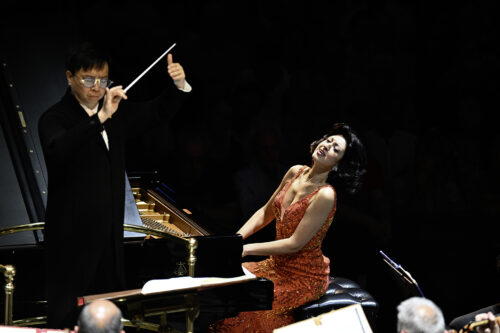
Nadia Boulanger’s Fantasy for Piano and Orchestra provided the real revelation of the first half. Alexandra Dariescu proved a compelling champion, demonstrating exactly the qualities that made Boulanger herself such a formidable pianist: flair, bravura, panache and aplomb.
Dariescu brought remarkable vitality to the solo writing, combining elegance with muscular authority. The shifting moods and sudden changes of character were shaped with imagination, her playing possessing both refinement and dramatic conviction. Rather than treating the work as a historical curiosity, she revealed it as a composition of genuine personality and invention. A particularly striking moment came when a Rachmaninov-like melody was entrusted to the second violins, Dariescu accompanying with remarkable sensitivity and allowing the orchestral line to sing.
Kahchun Wong and the Hallé responded with sensitivity and precision, providing an alert orchestral partnership that allowed Boulanger’s distinctive voice to emerge. Such a persuasive performance revealed a composer whose music deserves far greater recognition.
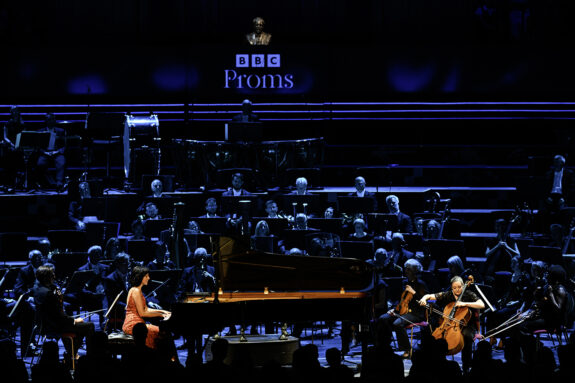
One hopes this will not be the last Proms appearance for either this remarkable work or its outstanding advocate. For an encore, Dariescu was joined by the Hallé’s principal cellist Rachel Helleur-Simcock, and together they played the third of Boulanger’s Three Pieces for Cello and Piano, which went down like wildfire with the audience. Dariescu had proclaimed, ‘History is not quite finished’. Indeed, not quite.
Rachmaninov’s Symphony No.2 proved the evening’s greatest disappointment, even surpassing the faux Ravel that opened the programme, a turgid reading that too often mistook restraint for profundity. The interpretation was consistently held back, overly tasteful and apologetic, with Wong taming the symphony’s emotional extremes rather than allowing them to erupt naturally. That prevailing reserve continued throughout the work, with the symphony frequently feeling carefully contained rather than emotionally unleashed.
The Largo was overly mannered and fussy, its spaciousness becoming ponderous rather than expansive, with the long-breathed paragraphs lacking the forward thrust, momentum and onward drive required to prevent the symphonic argument from becoming static; the tempi often felt too slow and lethargic. The underlying tension remained too tightly controlled, the brooding intensity never fully gathering momentum. The great climactic paragraphs felt measured and constrained rather than overwhelming, as though Wong was reluctant to allow the symphony’s emotional weight to fully unfold and ignite.
The second movement, Allegro molto, brought greater rhythmic definition and sharper orchestral detail, with the Hallé responding with impressive precision but limited expressive abandon. Yet the movement’s restless energy and darker impulses were softened by an overly cautiously coy approach. The scherzo-like writing lacked sufficient bite and volatility, with the momentum frequently restrained by a desire for elegance and control rather than propelled by instinctive urgency.
The Adagio felt depressingly detached and distantly disinterested, far removed from the yearning and striving that lie at the heart of this stirring symphony. Sergio Castelló López shaped the celebrated clarinet solo with serene soulfulness, providing the movement’s most affecting moments of melancholia despite Wong’s languid and leaden conducting.
The finale, Allegro vivace, displayed the Hallé’s considerable technical strengths, particularly in the brass playing, which brought brilliance, nobility and impressive weight. Yet the final release remained elusive. The percussion was too timid and tastefully restrained where greater elemental force, rhythmic bite and theatrical impact were required, and the closing pages lacked the necessary attack and emotional urgency.
Rachmaninov’s final affirmation should arrive as an overwhelming culmination of everything that has preceded it, but here it felt too controlled and cautious, missing the liberation and triumph that can make the symphony such a powerfully life-enhancing experience.
Needless to say, I appeared to be in a minority of one, as the packed-out Prom audience erupted in ecstatic applause.
Alexander Verney-Elliott
Featured Image: Pianist Alexandra Dariescu and cellist Rachel Helleur-Simcock © BBC/Chris Christodoulou
I thought it was a wonderful concert and I enjoyed every minute of it … given by such a hard-working and accomplished ensemble.
[Edited]