
 United Kingdom Jeths, Mahler: BBC Scottish Symphony Orchestra / Antony Hermus (conductor). City Halls, Glasgow, 8.10.2026. (GT)
Willem Jeths – Mors Aeterna
Mahler – Symphony No.10 (ed. Deryck Cooke)
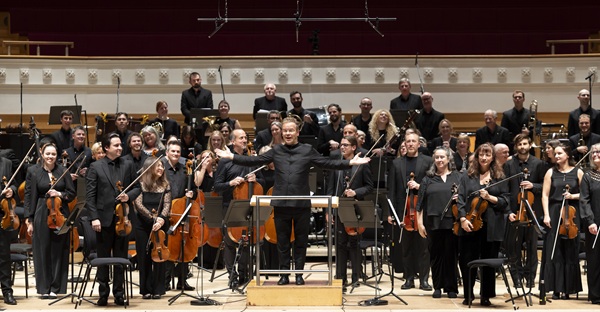
This concert marks the first appearance of this orchestra’s Chief Conductor designate for next season. The sought-after Dutchman Antony Hermus commands a career of conducting the central repertoire while exploring neglected corners of the 19th and 21st centuries. The programme was perhaps characteristic for this orchestra, bringing together a relatively unknown Dutch composer with one of the giants of the symphonic repertoire.
We were fortunate to have Willem Jeths in the hall, and in the pre-concert talk, he explained that his piece was composed as a prelude to his Requiem (2017) in an exploration of the afterlife. Of course, his thoughts sit well with the often-repeated anecdote that the only things that are definitive in life are death and taxes. Mors aeterna (‘Death is Eternal’) from 2015, is a poignant meditation on eternal life.
Willem Jeths’s work opened with a deeply melancholy chord on the low brass and the idea transformed into a series of deeply exciting sequences in the orchestra; there were great blows on the grand casa, as if announcing death, followed by explosions of anger and terror throughout the woodwind and brass. Bringing light to the drama, a solo flute offered a respite from the dreadful aural picture. Slowly, but surely, an alluring theme on the strings brought a feeling of a catharsis and closed in a serene mood of liberation.
Without a break, Hermus went directly to the Mahler Tenth’s opening Adagio with a beautiful flowing passage on the violas, as if continuing the theme of death into the symphony. The strings introduced a sumptuously beautiful sequence with an exquisite viola solo from Justin Julian introducing the theme before the strings adopted it employing greater passion; yet as an afterthought, before the close, elements of dissonance on the brass materialise.
It was clear that Hermus is a captivating conductor to watch; everything is expressed through his hands and arms, without a baton; his expression is entirely through his gestures, without extravagant mannerisms. It was apparent that the rehearsal process is crucial to achieving a rapport with his musicians. In the Scherzo, there now seemed a difference in the symphony we were listening to, for this was more Deryck Cooke than Mahler; this was not only in the themes but in the orchestration, which was more advanced than Mahler’s own orchestral techniques, albeit he had begun exploring dissonance. A joyful mood emerged and typically Mahlerian ländler embraced it with gaiety and exuberance.
The element of Cooke’s orchestration was more evident in the third movement (Purgatorio: Allegretto moderato) echoed by the magnificent virtuosity of the orchestra, often brilliant in the woodwind; with the dialogue of bird song, heard in the singing of the flutes, clarinets and bassoons. This was a brief vignette in the struggle of cheerless and untroubled melodies against the menace of a diabolical undercurrent; which closed with a harp arpeggio and on the gong. In the fourth movement (Scherzo) beautiful passages of orchestral playing emerged in sequences of waltz-like dances, especially beautifully intoned on the strings, enhanced by a violin solo from David Guerchovitch. A passage of ruthless drama was heard from the expanded percussion group of the two timpani and bass drum, reminding one of Mahler’s words, ‘Ah, God! Farewell my Lyre!’
The Finale reprised a rather Wagnerian call on the brass, reminding one of Siegfried’s sombre colours, in a military march. At the heart of the sequence was an exquisite flute solo from Eilidh Gillespie heralding the beautiful idea from the strings before a slow rise in emotion ended with a pensive note on the tuba of Elliott Milum. The extended transcendental strings’ passage bought closure.
Antony Hermus revealed outstanding interpretative gifts in handling the great orchestral forces in such a challenging score as Mahler’s Tenth Symphony. One looks forward to this exciting conductor and his future concerts in the 2027-8 season. We are fortunate that in the coming seasons, Scotland’s orchestras are eminently blessed with some of Europe’s finest conducting talent.
Gregor Tassie
‘It was clear that Hermus is a captivating conductor to watch; everything is expressed through his hands and arms, without a baton; his expression is entirely through his gestures, without extravagant mannerisms. It was apparent that the rehearsal process is crucial to achieving a rapport with his musicians.’ Reminded me of Herbert Blomstedt, with similar wonderful results!