
 United States ‘Steve Reich at 90 – A Birthday Celebration’: Taylor Levine (electric guitar), Bang on a Can All-Stars and Ensemble Signal / Brad Lubman (conductor). Cal Performances, Zellerbach Hall, University of California Berkeley, 24.10.2026. (HS)
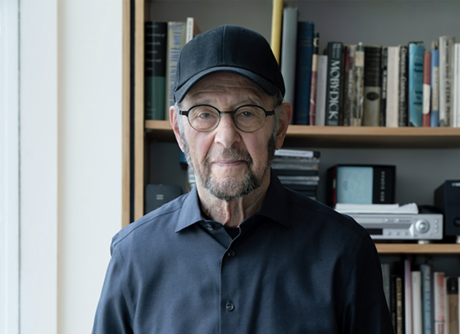
Steve Reich – Electric Counterpoint (1987); Double Sextet (2007); In All Your Ways (2026 – Cal Performances co-commission)
Cal Performances, presenter of all kinds of music at the University of California Berkeley, has a long and fruitful connection with the nonagenarian composer Steve Reich. Dating back to Piano Phase, which Cal presented in 1967, Reich has been featured regularly by the organization, including commissions such as Runner which had its U.S. premiere here in 2016.
The composer’s most recent piece, In All Your Ways, got its West Coast premiere on Saturday in a scintillating, 90-minute program, ‘Steve Reich at 90 – A Birthday Celebration’. With Reich’s longtime colleagues in the New York-based Ensemble Signal and conductor Brad Lubman plus members of the Bang on a Can percussion ensemble on mallet instruments, the music was in able hands.
One of the founding voices of American Minimalism, Reich has produced some of the most soulful pieces in the genre. Many of them employ recorded elements for the live musicians to expand against in performance. His most striking was the deeply moving Different Trains, written for a string quartet playing against their own recorded background (and spoken voices). Reich used Minimalism’s fascination with chugging rhythms to contrast people on modern trains with those on Nazi concentration-camp-bound freight cars.
All those techniques were present in the three pieces on this program, but the standout was the newest piece. In All Your Ways expressed its points with engaging soulfulness. Inspired by Proverbs 3:6 (‘In all your ways acknowledge Him, and He will make your paths straight’), Reich’s melodic and harmonic development wended its way from one heartwarming episode to another. It built to a finish with a glorious unison statement that felt like reaching a sunlit clearing out of a leafy forest.
In his program note, Reich recalled that he wrote it immediately after composing two pieces for voices that set religious texts. He used the rhythm and vocal curve of the four-syllable title phrase to generate the musical motif for this new work. As it developed, the motif divided into four rhythmic versions, the first based on sixteenth notes, then eighths, quarters and, finally, triplets. Some other pieces of his create whole movements out of these different note durations but this one mixes and matches constantly, changing scales and time signatures that vary colors like a kaleidoscope.
Those colors, provided by piano, two marimbas, two vibraphones, two flutes, two clarinets and a string quartet, resulted in music that was continually morphing into another state of mind. Over its 18 minutes, it never felt repetitious, just evolving gradually from moment to moment until that final unison.
In the past three decades Lubman has conducted and recorded the New York-based Ensemble Signal in such Reich pieces as Music for 18 Musicians, Radio Rewrite and Double Sextet, which was the second piece on this program. His unusually vigorous baton-free technique employs karate slashes, finger signals and occasional fists, and palms inviting specific combinations of instruments. It certainly worked effectively in both ensemble works which flowed with certainty.
All the music was amplified, so balances were the responsibility of the audio technician, and though it felt louder than I would have liked the sound did not blare.
The concert opened with Electric Counterpoint, a guitar solo written in 1987 for the jazz guitarist Pat Metheny. It was the third of Reich’s pieces for well-known soloists playing live against their own recorded accompaniments. (The first was Vermont Counterpoint in 1982 for flutist Ransom Wilson, followed by New York Counterpoint in 1985 for clarinetist Richard Stolzman.) Taylor Levine created his own accompaniment by recording 10 tracks on guitar and bass guitar. The result was stunning, rich with syncopation, canon overlaps and melodic turns. Levine’s live performance was reminiscent of jazz solos, though looped into a series of Reich-signature riffs that circled back on each other before moving on. Although a few extemporized licks might have livened things up, Levine got an improvisational quality to his playing. The rhythms established themselves with a nice bounce. Rapid-fire melodies required virtuosity and got it.
No pre-recording was necessary for the overlapping effect of two identical flute-clarinet-violin-cello-piano-vibraphone sextets to make Double Sextet endlessly fascinating. The piece, which earned a Pulitzer Prize, started with Minimalist rhythms in the pianos and vibraphones. Clocked in brightly, they set a foundation for the flairs of the woodwinds and strings as they spun smoothly into the mix.
All three pieces contributed to a brisk evening that turned out to be a knowledgeable, enthusiastically executed tribute to an American composer who is a true cultural treasure.
Harvey Steiman