
 Ireland Debussy, Falla, Borodin, Dvořák: Herbert Schuch (piano), RTÉ Concert Orchestra / Swann van Rechem (conductor). National Concert Hall, Dublin 24.1.2026. (RB)
Debussy – Prélude à l’Après-midi d’un faune (L.86)
Falla – Nights in the Gardens of Spain
Borodin – In the Steppes of Central Asia
Dvořák – Symphony No.8 in G major
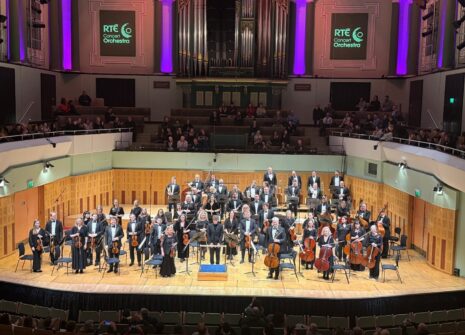
The RTÉ Concert Orchestra were joined by French conductor, Swann van Rechem, for this programme showcasing works from the late Romantic period and early twentieth century. German pianist, Herbert Schuch, was the soloist in Falla’s Nights in the Gardens of Spain.
The concert opened with Debussy’s Prélude à l’Après-midi d’un faune. This extraordinary work is a response to a poem by Mallarmé which describes a faun’s sensual, dreamlike encounters with nymphs. It is a seminal work which ushered in a new musical era after its premiere in Paris in 1894. Pierre Boulez famously stated, ‘the flute of the faun brought new breath to the art of music’ and he described the work as ‘the awakening of modern music’.
Swann van Rechen and the RTÉ Concert Orchestra did a brilliant job bringing Debussy’s sensual atmospheric symphonic poem to life. Silvija Ščerbavičiūtė’s languid opening flute solo was clear and precise while at the same time having the necessary sensuality and improvisatory freedom to usher in Debussy’s intoxicating sound world. Van Rechem allowed Debussy’s orchestral textures and sonorities to build in a layered way while maintaining a hazy, impressionistic glow. I was struck by the clarity of the textures and the constantly evolving shifts in colour. Van Rechem was also very attentive to the dynamic shifts within the score and coaxed perfumed sensual phrases from the players.
We moved from French to Spanish impressionism with Falla’s Nights in the Gardens of Spain. The music was originally conceived as a set of nocturnes for piano solo. The pianist Ricardo Viñes persuaded Falla to turn the piece into a work for piano and orchestra. Falla completed the work in 1915, and it is dedicated to Viñes. The first and third movements are depictions of the gardens in the Generalife and Sierra de Córdoba respectively while the middle movement depicts an exotic dance in an unidentified garden. While the piano has an important solo role, the work is not a piano concerto but more of a series of symphonic impressions for piano and orchestra. The piano has a concertante role which needs to blend with the orchestra. The work successfully integrates impressionism with Spanish folk idioms.
In the opening section of the first movement, Van Recham and the orchestra’s strings captured the dark, drowsy atmosphere while the woodwind conjured up the evocative jasmine associated with the Generalife Gardens. Schuch blended seamlessly with his orchestral partners, and I was struck with his nimble fingerwork and clear articulation. There was impressive virtuoso playing from Schuch at the climax points to the first movement although he ensured the torrents of notes remained part of the orchestral texture and not a vehicle for solo display. There was excellent interplay between piano and orchestra in the second movement and Schuch did a fine job of mimicking the Spanish guitar. Van Rechem injected passion and fire into the music at the climaxes and I was struck by the very dramatic quality of this interpretation. The final movement evokes a gypsy festival and piano and orchestra combined to produce vibrant rhythms and evocative colours. Schuch’s shaping of the phrases was pristine and the snapped flamenco rhythms were well executed. The brass fanfares highlighted the celebratory nature of the festival while the march-like section had a machismo quality. In the closing bars, piano and orchestra retreated into the shadows as quiet chords brought the piece to a close.
In the second half of the concert, we moved to Russia and Bohemia with works by Borodin and Dvořák. Borodin’s In the Steppes of Central Asia acted as a short curtain raiser, and it received a polished and stylish performance from the RTÉ Concert Orchestra. Dvořák’s Eighth Symphony is a wonderful work and in my view one of the greatest symphonies to emerge from the nineteenth century. Dvořák composed it as a gesture of thanks to the Bohemian Academy of Science Literature and the Arts for electing him to membership. With its use of traditional Bohemian melodies and its evocation of birdsong and woodlands it is also a celebration of Czech nationalism.
In the Allegro con brio first movement, Van Rechem very successfully navigated the shifts between the melancholic, pastoral and stormy episodes. The cellos and horns captured the soulful melancholy of the opening theme in G minor. The bird calls on the flute which ushered in the pastoral material were exquisitely executed. The transitions and shifts in tempo were deftly handled by Van Rechem. The orchestra conjured up vivid scenes of Bohemian village life in the pastoral second movement. The woodwind once again produced beautifully realised bird calls while the descending ‘rain’ scales in the strings and woodwind were a delight.
The Allegretto grazioso third movement blends the high-brow sophistication of a Parisian waltz with the earthy grit of Czech folk music. The gorgeous opening melody in the strings was infused with longing while the rustic charm of the Bohemian countryside shone through in the trio. Van Rechem injected energy and dynamism into the coda (a Czech furiant) while ensuring the music stayed moored to its pastoral roots. Rafael Kubelík remarked: ‘In Bohemia, the trumpets never call to battle, they always call to the dance’. The finale of the symphony opened with this call to the dance and to village festivities. The variations which followed were well characterised, and Van Rechem unleashed the full power of the orchestra in the stormy central episode. The coda was an unbridled piece of playing which succeeded in bringing the house down.
Overall, this was a superb concert featuring first rate playing from both the soloist and the orchestra. Van Rechem was extremely impressive, and I predict we will be seeing a lot more of him in the future.
Robert Beattie