
 United Kingdom Haydn, Mozart: Louise Alder (soprano), Hanna Hipp (mezzo-soprano), Julien Henric (tenor), Daniel Okulitch (bass-baritone), Scottish Chamber Orchestra and Chorus (director: Gregory Batsleer) / Riccardo Minasi (conductor). Usher Hall, Edinburgh, 30.4.2026. (SRT)
Haydn – Paukenmesse (Mass in Time of War)
Mozart – Requiem
You never know with conductors. Every regular concertgoer will have had the experience of going to hear a big name that has delivered a flat, uninspiring performance, and of encountering an unknown who has set the orchestra alight with his or her direction. And not knowing is part of the excitement we get when going to hear live music.
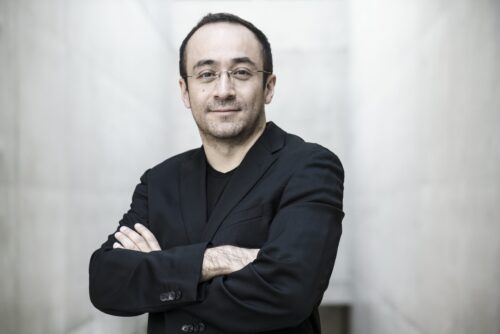
Debuts are always interesting, however, and hearing someone like Riccardo Minasi conducting a group like the Scottish Chamber Orchestra for the first time was always bound to be rewarding. After all, he is best known for helming period instrument groups like Il Pomo d’Oro, Ensemble Resonanz and Orchestra La Scintilla, so you would think he’d be a perfect fit for an orchestra with the period sensitivities of the Scottish Chamber Orchestra.
And in many ways, he was. The opening of both Haydn’s Paukenmesse and Mozart’s Requiem were drawn so carefully, subtly quietly that they seemed to have been drawn only reluctantly out of the silence, and what did break through the hush was played with delectable period sensitivity by the musician of the SCO, playing mostly on historically authentic instruments. The strings were as lithe and agile as an Olympic athlete – bravo to cellist Robin Michael for dancing his instrument though Haydn’s Qui tollis – the brass were forthright and urgent – a similar bravo for the trombonist in Mozart’s Tuba mirum – and the winds silky and fluid, be it the wheezy basset horns in the Mozart’s Recordare, the dangerous bassoons in his opening Introitus, or the feline clarinets at the opening of Haydn’s Gloria.
Throughout, Minasi acted like an energising force on the podium, galvanising the performance with theatrical flair, particularly with the upwardly coursing energy of the Paukenmesse’s Et resurrexit, or its fugue on Et vitam venturi. In fact, it was in the Paukenmesse that everything seemed to gel more convincingly. Part of Mozart’s Requiem felt uncomfortably stodgy, the Lachrymosa in particular coming close to getting bogged down, and the sopranos of the chorus sounding unusually foggy in the Confutatis.
Everyone seemed much more invested in the Haydn, perhaps for its variety value. The chorus sounded completely on point, loving their fugal moments as well as the big rush of the Gloria or the baleful Et incarnatus est, and singing with as much precision as commitment. Furthermore, the quartet of soloists – the cherubic soprano of Louise Alder, the velvety mezzo-soprano of Hanna Hipp, the ardent tenor of Julien Henric and the serious bass of Daniel Okulitch – balanced individual character with collective achievement. The military encroachment of the final Agnus Dei added a touch of theatricality that only a man of the theatre like Minasi could achieve.
The concert was recorded for BBC Radio 3 and will be broadcast on 6 May 2026.
Simon Thompson