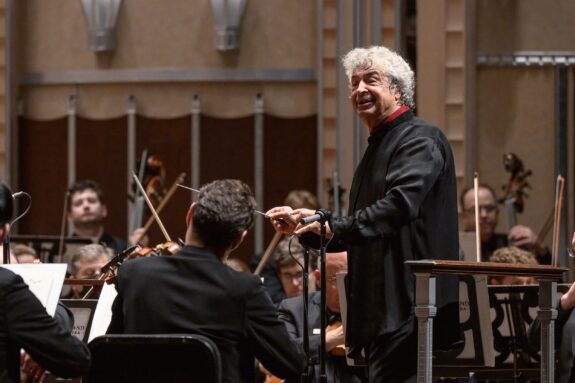
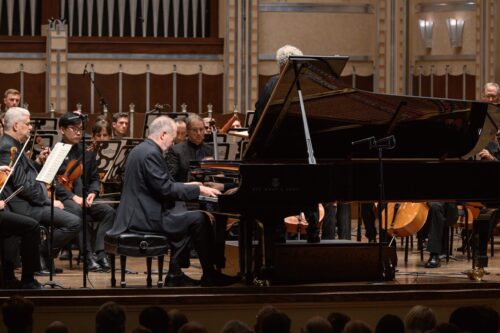
 United States Summers at Severance 2026 [1] – Various: Garrick Ohlsson (piano), The Cleveland Orchestra / Semyon Bychkov (conductor). Mandel Concert Hall at Severance Music Center, Cleveland, 16.7.2026. (MSJ)
Smetana – ‘The Moldau’ from Má vlast
Rachmaninoff – Piano Concerto No.1 in F-sharp minor, Op.1
Encore: Debussy – Clair de lune
Dvořák – Symphony No.8 in G major, Op.88
The ‘Summers at Severance’ part of the Cleveland Orchestra’s summer season started with an evening of richly-colored performances from guest conductor Semyon Bychkov and beloved soloist Garrick Ohlsson. Ohlsson chose Sergei Rachmaninoff’s First Piano Concerto for the program, a work that the pianist has said he encountered in childhood thanks to an LP record of Rachmaninoff’s own performance with Leopold Stokowski and the Philadelphia Orchestra. He clearly learned more than just the broad outlines of the work from that record, for today Ohlsson skillfully balances Rachmaninoff’s emotionality with a poise and forward momentum that keeps the music from sagging, even when the composer writes moments of languid sumptuousness into his music.
Ohlsson’s fingerwork was electrifying from the concerto’s opening cascades, supported by the like-minded conducting of Semyon Bychkov who was intent on unleashing as much color and warmth as possible orchestrally, short of losing momentum. The Cleveland Orchestra, while known for their patrician reserve, showed that they can also shine in a more saturated style of playing. The balance between indulgence and elegance reflected Ohlsson’s course through the flamboyant concerto which served as Rachmaninoff’s first calling card, launching his international career. The dazzling Vivace first movement was followed by the darkly lyrical Andante. No amount of performance skill can quite hold together Rachmaninoff’s discursive finale, so Ohlsson simply made the most of the lyrical interlude in the middle of the movement, then threw himself with complete abandon into the brilliant closing pages. It was an exquisite choice to follow Rachmaninoff’s rich impasto colors with the delicate watercolors of Debussy’s Clair de lune.
No less successful was Bychkov’s traversal of Antonín Dvořák’s Eighth Symphony. This was old-school conducting: phrases boldly shaped, string playing with big, deep sweeps of the bow, but with special attention paid to make sure the woodwinds’ bright colors never got lost in the saturated sound, and that brass and percussion always punched through the textures at key moments. Bychkov kept things moving through the episodes of the first two movements, while knowing exactly where to broaden a phrase or enhance a shadow, as in the contrast between the flutes’ birdsong in the Adagio and the answering phrase in the clarinets and low strings. The third movement was a touch more wistful than usual, and the finale unhurried until its energetic coda. The woodwinds were outstanding throughout, headed by section principals Joshua Smith (flute), Frank Rosenwein (oboe), Afendi Yusuf (clarinet) and John Clouser (bassoon). Also notable was concertmaster Joel Link’s solo in the second movement.
The concert had opened at the same high level with a just-about ideal performance of Bedřich Smetana’s tone poem The Moldau from his My Fatherland cycle. One might think about quibbling that it would have been nice to hear something led by Bychkov that he hadn’t already done in Cleveland within the last decade, but who can complain in the face of a performance so singing and warm? From making sure that the winds started the burbling textures of the piece with full, lucid tone, to ensuring that the intertwined trumpet parts capped the climax like glints of sunshine on river water, Bychkov asked for top-level excellence from the orchestra and got it. It was a performance that Cleveland’s legendary director George Szell himself would have approved of, and that’s about as high as the praise gets around here.
Mark Sebastian Jordan
Featured Image: Semyon Bychkov conducts the Cleveland Orchestra © Yevhen Gulenko/TCO