
 Germany Dresden Music Festival 2026 [6] – Ravel, Shostakovich, Mendelssohn, Liszt: Igor Levit (piano). Kulturpalast Dresden, 28.5.2026. (MC)
Ravel – Kaddish from Deux mélodies hébraïques (Two Hebrew Songs) – version for piano by Alexander Siloti
Shostakovich – Piano Sonata No.2, Op.61
Mendelssohn – Selection from Lieder ohne Worte (Songs without words): E minor, Op.62/3 (‘Funeral March’); A minor, Op.53/5 (‘Folk Song’); A minor, Op.62/5 (‘Venetian Gondola Song’); A major, Op.19/4; E minor, Op.102/1
Liszt – Après une lecture du Dante – Fantasia Quasi Sonata from Années de pèlerinage (Years of Pilgrimage), Second Year: Italy, S161
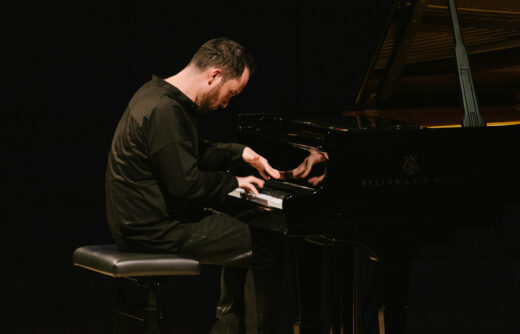
Russian/German pianist Igor Levit was born in Nizhny Novgorod and has made his home in Berlin. At Kulturpalast Levit’s programme, although a very personal one, was still an attractive one. There are, I believe, a small number of pianists who have a special aura about them with the most recent being Pollini and Argerich. In this superior group I would place Igor Levit who appeared in the packed out Kulturpalast.
Lights down, Levit strode onto the stage, sat at his Steinway and slowly and expressively commenced the piano piece Kaddish, a song from Maurice Ravel’s Deux mélodies hébraïques (Two Hebrew Songs) from 1914. This arrangement for piano was prepared by composer and pianist Alexander Siloti, a product of the Russian Empire, now present-day Ukraine. Biblical in origin, this Jewish song in praise of the dead has a delightful traditional melody. Positioned at the top of the concert programme Levit was likely playing the piece to commemorate the recent and past Israeli deaths by terrorism. Most assured the soloist created a terrific sound with shades of the orient and a hazy atmosphere. It was curious how Levit seemed to make Kaddish sound like a masterwork, which it wasn’t.
Levit’s next choice was Shostakovich’s Piano Sonata No.2 in B minor, Op. 61 composed in 1943. It was dedicated as a memorial to Leonid Nikolayev his former piano teacher who died in 1942. At this time with World War 2 raging Shostakovich and his family were evacuated to Kuybyshev, now present-day Samara. Shostakovich was a fine pianist, and the sonata is both unerringly introspective and reclusive. His son Maxim described the B minor Sonata as ‘one of Shostakovich’s most tragic scores’. Standing out for me was Levit’s concentration in the Largo movement that crept along as a rather unstable waltz, rather than an authentic dance. The waltz gave way to a spine-chilling central passage in the manner of a tentative funeral march.
After the dark cruel world of Shostakovich Levit then turned his attention to Mendelssohn’s collection of Lieder ohne Worte (Songs without Words). This series comprises forty-eight brief lyrical piano pieces were composed between 1829 and 1845. It was Robert Schumann who described these works as ‘an art song abstracted for the piano, with its text deleted’. In my view the Songs without Words are greatly undervalued but not by Levit who chose to play a selection of five from the collection.
In the piece in E minor, Op.62/3 known as ‘Funeral March’ Levit was convincing and heavily solemn and then gave a contrasting hymn like passage. Titled ‘Folk Song’ a brilliant piece in A minor, Op.53/5 its repeated theme was given a vigorous character. Known as the ‘Venetian Gondola Song,’ the piece in A minor, Op.62/5 where Levit played a gentle melody yet was able to create an inner tension. A favourite of mine the piece in A major, Op.19/4 has a glorious, repeated melody that he varied in weight and expression. Last came the piece in E minor, Op.102/1 where Levit was measured and splendidly dignified.
To conclude the recital Levit chose Après une lecture du Dante – Fantasia Quasi Sonata (After Reading Dante: Fantasia Quasi Sonata) sometimes known as the ‘Dante Sonata.’ Composed in 1837-49 it is the conclusion of the second volume of his piano collection Années de pèlerinage (Years of Pilgrimage). A substantial work the Dante Sonata is renowned for being innovative and technically challenging. Because of the extensive contrasts in tempi and dynamic I was thrilled by the level of drama produced by Levit who was so immersed in the score.
It was breathtaking to hear Levit’s playing prosper with such alert concentration, undoubted sincerity and layers of expression.
Michael Cookson