
 United States Various: Alexandre Kantorow (piano). Mandel Concert Hall at Severance Music Center, Cleveland, 16.4.2026. (MSJ)
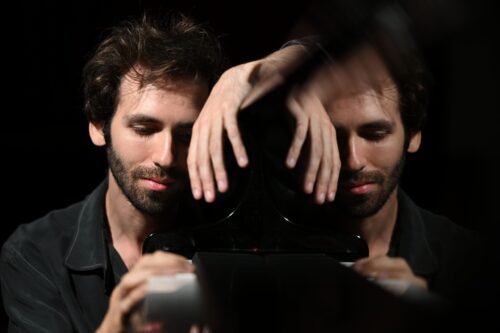
Bach/Liszt – Variations on Weinen, Klagen, Sorgen, Zagen, S.180
Medtner – Piano Sonata in F minor, Op.5
Chopin – Prelude in C-sharp minor, Op.45
Alkan – Prelude No.8 in A-flat minor, Op.31, ‘Chanson de la folle au bord de la mer’
Scriabin – Vers la flamme, Op. 72
Beethoven – Piano Sonata No.32 in C minor, Op.111
Encore: Liszt – arrangement of ‘Liebestod’ from Wagner’s Tristan und Isolde
I am not sure if Alexandre Kantorow’s performance in Cleveland was a recital or a séance but, either way, he conjured the spirit of a long-lost way of playing the piano. Beethoven himself led to a more emotional style of playing in the early nineteenth century, and Liszt transformed the dominant style into what has often been referred to as ‘The Grand Manner’, replete with thundering dynamics, manipulated tempos and a larger-than-life, swashbuckling sense of style. It became the essential style of the remainder of the 1800s, and echoes of it were carried forward by 20th-century pianists such as Sergei Rachmaninoff and Vladimir Horowitz.
The problem is that if the performer doesn’t have the megawatt energy output of a Liszt or Horowitz, such machinations can sound very calculated and exaggerated. It fell out of favor for most of the last hundred years, replaced by the so-called inspired literalism of an age of science. That, too, has run its course, which resulted in generations of pianists who almost seem afraid of the instrument, playing with what could best be described as excessive taste. Thank God the tide is again shifting, and Alexandre Kantorow is at the forefront of that wave.
The program billed the first work as being by J.S. Bach/Franz Liszt, which may indeed be how it was published. But make no mistake, the Bach chorale is merely a launching pad for one of Liszt’s most harrowing pieces, written in the wake of the death of one of his children. It is the kind of piece that requires the performer to either inhabit the grand manner or go home, and Kantorow wasn’t about to head home. Instead, he tore into it like an incarnation of Liszt himself, not aping the style but truly embodying it. He didn’t portray Liszt’s roaring, swashbuckling style, he was it. It proves that with the right energy level, deployed with seriousness and sincerity, Lisztian pyrotechnics can be expressive tools of the first order.
Hardly less virtuosic was the rarely-heard first piano sonata of Russian composer Nikolai Medtner. Kantorow plunged into the large piece with a sense of adventure and risk, finding rich colors and textures that made this work come off as a cross between Liszt and Rachmaninoff with a touch of Scriabin’s mysticism. Even more than the Liszt variations, this sonata felt like the music one might conjure up in a fin de siècle spiritualist’s crystal-ball session. The second movement is an extraordinary one: on one hand, it is a sturdy march, but Medtner wrote it so that veils of twisted harmony are wrapped around the march’s legs, and Kantorow savored the cognitive dissonance. The third movement opened with a nod to the ‘Muss es sein?’ motive from Beethoven’s final string quartet (also echoed in Liszt’s Les Préludes and Franck’s Symphony in D minor) before escaping into an effusive middle section. Only the finale of the work seemed to run on a bit long for its material (or so it seemed on first hearing), but Kantorow brought a fierce advocacy to the piece that made it a worthwhile excursion.
After intermission, the French pianist opened with Chopin’s Prelude in C-sharp minor which demonstrated that peculiar gift of Chopin’s to pierce emotionally without even raising his voice. It was a shrewd choice, a comparative palate cleanser after the Medtner, yet with enough nervousness to promise that this particular adventure in listening was far from over. And Kantorow built the program brilliantly by progressing on to the next two pieces without pausing for applause. From the unease of the Chopin, we immediately dropped into the terrifying dissociation of Charles-Valentin Alkan’s Prelude No.8 in A-flat minor, subtitled ‘Song of the Madwoman on the Shore of the Sea’. For those who don’t know Alkan, he was an eccentric virtuoso pianist and composer who in his youth rivaled Liszt. Unlike Liszt, though, Alkan didn’t much care for performing in public. He withdrew from the public eye and concentrated on composing and teaching, creating some visionary works along the way. The Prelude, especially as set up by Kantorow, was terrifying. Everything but the final chord of the work was stretched to the extremes of the keyboard, with an obsessive pattern of dense low chords underlying a fragile and fragmented melody up high. As the piece built to a delirious peak, Kantorow’s intensity was breathtaking. And when he broke off from that peak and stealthily resumed the opening pattern, the piece became claustrophobic and suffocating. He followed, again without pause, with Scriabin’s transforming Vers la flamme (Toward the Flame), releasing the buildup of energy in an almost deranged climax.
But Kantorow wasn’t done. He paused a moment to let the crowd clap and then quickly launched into Beethoven’s final piano sonata with energy (and technique) to burn. We last heard the Piano Sonata No.32 at Severance from Mitsuko Uchida, who – without question – is one of the great pianists of the age. That said, however, Uchida’s approach to Beethoven was very lowkey and understated, an approach that, frankly, restricts Beethoven’s world. The first movement of this work is Beethoven’s final statement in his vintage, fist-shaking rhetorical style (nicely relating to the Lisztian grand manner), but Kantorow made sure that there were moments when we could hear Beethoven’s rhetoric cracking open to reveal a distant vision of the paradise to come. And the pianist approached that pinnacle slowly but ceaselessly in the long slow movement of this two-movement sonata, climbing like a pilgrim on a holy mountain. Kantorow’s approach was so inspired, the infamous ‘boogie-woogie’ variation passed without any awkwardness, as the movement finally swept up to trill-laden bliss. Uchida’s graceful performance didn’t achieve transcendence. Kantorow’s did.
The audience response was rightly ecstatic, and they refused to let him leave without more. Kantorow thanked the crowd, acknowledging that the Beethoven was a hard piece to follow. Then to some gasps from the audience (including at least one jaded critic), he announced that his encore would be Liszt’s arrangement of the ‘Liebestod’ from Wagner’s Tristan und Isolde, which he proceeded to play as if he hadn’t already taken this assemblage on a finger-busting, soul-shattering journey. In those seven minutes, he did it all over again. Stunning.
Mark Sebastian Jordan
Yaaaassssssss!!!!!!!
You got it, Mark!!!
Did hear Alexandre play last year in Chicago! He opened with two Brahms not taking a break between them. I did cry in Chicago. BUT NOT LAST THURSDAY NIGHT. Stayed sane, worshipped Alex, cried later.
Thanks! I was delighted to see that he will be returning to guest and tour with the Cleveland Orchestra next season in Rachmaninoff’s Rhapsody on a Theme of Paganini, a piece he’s born to play!!
Like everywhere he goes Alexandre Kantorow delights his audience in Cleveland as well with his genius and unique style and talent!! This is why we adore him!! ❤️
I hope he remains a frequent visitor to Cleveland. He’s certainly among my favorites after that recital!
Just heard him play in Berkeley, the same concert. This marvelous review captures this extraordinary pianist’s brilliance and religiosity.