
 United Kingdom Handel, Acis and Galatea, HWV49 (1718): Soloists, singers and instrumentalists of Les Arts Florissants / William Christie (director, harpsichord and organ). Wigmore Hall, London, 1.6.2026. (CSa)
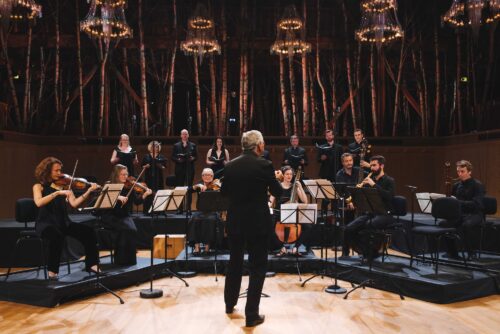
In the second week of its 125th Anniversary Festival series, Wigmore Hall invited the French Baroque musical ensemble Les Arts Florissants under its renowned American-born French director William Christie to give an historically informed platform performance of one of Handel’s most exquisite – and in his day most popular – entertainments, the opera or more accurately ‘masque’ Acis and Galatea. A pastoral work drawn from Ovid’s Metamorphosis and based on a poem by John Gay, its tuneful arias, infectious rhythms, delicate scoring and simplicity of plot make it a work of breathtaking beauty.
Although London W1 is a world away from Arcadian Naples in which the opera is set, and Wigmore Hall but a pale substitute for Cannons near Edgware, the magnificent palatial seat of the Duke of Chandos where in 1718 the opera was first performed, we were immediately transported into an enchanted world of happy nymphs and swains from the opening bars of the opening Sinfonia. Among those verdant plains and woody mountains, we first encounter the water nymph Galatea (the agile and sweet-voiced soprano Rachel Redmond) and the shepherd Acis (mellifluous tenor James Way). They are rapturously in love, but their bliss is threatened by the lustful and murderous monster Polyphemus (compellingly sung by stentorian bass-baritone Padraic Rowan) despite the efforts of fine lyric tenor Richard Pittsinger as the conciliatory Mountain spirit Damon.
Taking their places on the platform beneath the Wigmore Hall’s famously decorated cupola depicting ‘the Soul of Music’, 10 musicians with original or replica Baroque strings, woods, and a Padova-model theorbo, bunched around a small organ and harpsichord from which Christie, a nod here, a wave of the arm there, subtly guided the proceedings. The result was at once joyous and consoling: vivid, bright and sensuous music making which breathed life into Handel’s 18th century score and blended in exquisite harmony with the voices.
Redmond, resplendent in a diaphanous sequined gown of midnight blue gave us a smiling but suffering Galatea. Her agile coloratura, virtuosic vocal ornamentations and effortless clarity made such airs as ‘Hush ye pretty warbling quires’ (deftly accompanied by Sébastien Marq’s chirruping bird-like recorder) and ‘As when the dove laments her love’ bucolically tender. James Way brought genuine emotional drive and the necessary reckless fervour to the doomed Acis in airs such as ‘Where shall I seek the charming fair’ as he vainly searched the groves and crystal fountains for his elusive goddess. Richard Pittsinger’s cautionary Damon was sung with great artistry making the aria ‘Stay shepherd, stay!’ a standout moment of refined vocal grace.
It is not until Part II, and the ominously fatalistic opening chorus ‘Wretched lovers! Fate has past’ and dire warnings of nodding mountains, shaking forests and thundering giants that we are introduced to Polyphemus, the one-eyed monster that Padraic Rowan made his own. His combination of burning menace, humour, dramatic timing and complete vocal assurance in airs such as ‘O ruddier than the cherry’ almost stole the show.
Some concert performances of opera – especially those bound to the printed score – can easily stifle visual storytelling and flatten emotional narrative. We saw no boulder crush the unfortunate Acis, or the transcendent moment when Galatea’s slain lover is immortalised as a bubbling fountain. Yet, William Christie, in his luminous realisation on the Wigmore Hall stage, proved that Handel operas need no sets to soar or props to convince. Through his faithful direction and the dedication of his players and singers, all the usual limits were transcended, to deliver a profound and unforgettable evening of sympathy, joy and pure humanity.
Soloists and singers:
James Way (tenor) as Acis
Rachel Redmond (soprano) as Galatea
Richard Pittsinger (tenor) as Damon
Padraic Rowan (bass-baritone) as Polyphemus
Eugénie de Padirac (soprano)
Michael Loughlin Smith (tenor)
Chris Sallon