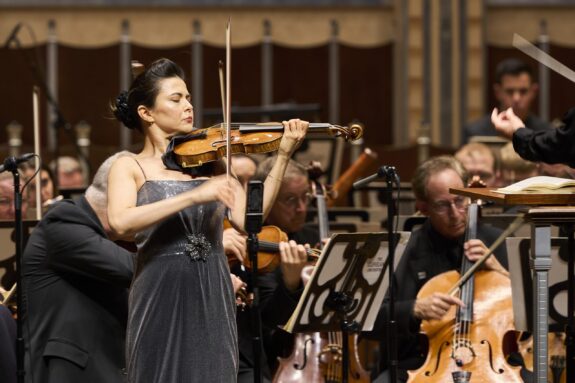
 United States Blossom Music Festival 2026 [3] – Shostakovich, Brahms: Karen Gomyo (violin), Cleveland Orchestra / Semyon Bychkov (conductor). Mandel Concert Hall at Severance Music Center, Cleveland, 18.7.2026. (MSJ)
Shostakovich – Violin Concerto No.1 in A minor, Op.77
Brahms – Symphony No.4 in E minor, Op.98
A combination of toxic wildfire smoke from Canada and a severe weather forecast prompted the Cleveland Orchestra to move this concert from Blossom Music Center in Cuyahoga Falls to the orchestra’s home at Severance Music Center in Cleveland. The move proved wise as a fierce line of storms passed through and the pall of smoke returned in force after the storms departed.
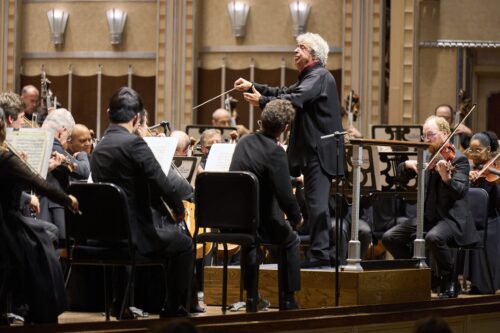
But inside Severance, the atmosphere buzzed with a different kind of electricity. Semyon Bychkov completed his pair of concerts this week with even more mastery than he had shown to considerable advantage in Thursday’s concert (review here). And violinist Karen Gomyo blazed like lightning in her performance of Shostakovich’s First Violin Concerto.
We have been blessed with many outstanding Shostakovich concerto performances in Cleveland in the last year or so, including Leonidas Kavakos in the Violin Concerto No.2 (review here) and Sol Gabetta in the Cello Concerto No.2 (review here). But this performance was every bit their equal, with Tokyo-born violinist Karen Gomyo making a welcome return to Cleveland. From the start of the shadowy and intense opening Nocturne, Gomyo listened closely to the orchestra, intertwining her lines with the low instruments that sketched out a dark, foreboding atmosphere. Gomyo never fell back into an all-purpose vibrato. Instead, she shaded every note, applying a vocal throb to some notes, while restricting her tone to a cold, pure tone on others, often all in one phrase, always searching for the expressive flow of the music. Bychkov brought the same awareness to the orchestral parts, conducting the two slow movements of the concerto without baton to soften the players’ attacks.
The blistering Scherzo took off like a shot, Gomyo proving that she could be explosive as well as fiercely poised. She pounced on Shostakovich’s personal signature – D, E-flat, C and B natural – woven into the texture, and the orchestra joined her with glee in the defiantly klezmer-influenced passages. Though not himself Jewish, Shostakovich made sure to take up for the persecuted minority in many of his pieces, and Bychkov had the orchestra dance fiercely through those passages. The movement brought a spontaneous wave of cheers and applause from the audience before the performance continued.
The concentrated third-movement Passacaglia found Gomyo’s violin and Robert Walters’s English horn poignantly entangled. Just when the somber stillness at the beginning of the cadenza had been reached, someone in the audience got a loud ringtone on a personal portable torture device (a.k.a. cell phone). Gomyo wasn’t fazed by it. Within seconds of the ceasing of the ring, she had reestablished a focus so compelling it felt like everyone in the hall was holding their breath. Gomyo built the cadenza to a ferocious peak, shredding some bow hairs along the way, leading into the cathartic release of the finale, which blazed like a wildfire (without the dreaded smoke!) and brought the audience to their feet in a well-deserved shouting ovation.
After such a moving and thrilling performance, I had my doubts about again diving deep for Brahms’s Symphony No.4. But Bychkov had no doubts. He eased into the interlocking phrases of the first movement with patience but certainty. His tempo was broad and flexible yet somehow still suggested a compelling sense of urgency. His momentum paused only at the transformed passage in the development, which is the first of several moments in the symphony where Brahms seems to float in a spellbinding backward glance at the people and moments lost in life. The quest continued, building up to furious peak, prompting one listener in the audience into a spontaneous ‘Wow!’ before a wave of applause swept the hall.
The slow movement with its arcane harmonies was, if anything, even more spellbinding. The second theme is sometimes a lull spot, as it lacks the odd harmonic tinge of the first theme, but Bychkov leaned into it, making it a compelling part of the growing chain of ideas. The third movement march burst out of the gate with hearty energy, leading to an imposing, vital performance of the passacaglia finale, just as concentrated as the one in the Shostakovich concerto. This rigorous drive did not preclude tenderness, as Bychkov allowed Joshua Smith all the time that he needed to find nuance in the despairing solo flute variation. But the following pages crushed in, pausing only for one delicate backward glance before the closing bars slammed the symphony shut. The audience response was thunderous, but Bychkov paused for a very long moment to gather himself before he turned and acknowledged it. Bychkov has made a strong impression in his Cleveland visits over the last decade or so, but this concert was his best yet and, following on the heels of Thursday’s excellent show, cements his stature as a true master.
Mark Sebastian Jordan
Featured Image: Karen Gomyo plays Shostakovich’s Violin Concerto No.1 © Roger Mastroianni/TCO