
 Germany Schleswig-Holstein Music Festival 2026 – Royal Swedish Orchestra: Catherine Foster (soprano) / Alan Gilbert (conductor). Hamburg, Elbphilharmonie, 18.8.2026. (DM-D)
Wagner – Prelude and Liebestod from Tristan und Isolde; Overture, Tannhäuser; Forest Murmurs, Siegfried; Funeral Music and Immolation Scene, Götterdämmerung
Wilhelm Stenhammar – Serenade, Op.31
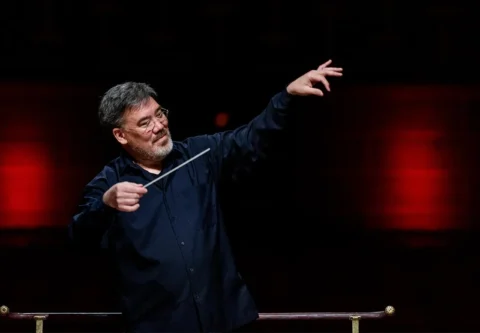
The Schleswig-Holstein Music Festival was launched in 1985 and has taken place annually since, at venues across the German federal states of Schleswig-Holstein, Hamburg, and Lower Saxony, as well as parts of Denmark. The programme has been varied, consisting of classical music, jazz and pop all the way to klezmer and electro. Theatre, comedy and literature readings round off the programme. In 2026, 205 concerts were and are scheduled from 4th July to 30th August. One of the classical music highlights this year was the performance of the Royal Swedish Orchestra, which is celebrating its 500th anniversary this year. It is the resident orchestra of the Royal Swedish Opera in Stockholm. The conductor of this programme, Alan Gilbert, has served as Music Director there since 2021. In 2022, King Carl Gustaf XVI of Sweden appointed him Royal Court Kapellmeister. Gilbert has also been the chief conductor of the resident orchestra of the concert venue, the Hamburg Elbphilharmonie, since 2019.
The programme was designed as a vehicle for Swedish soprano Nina Stemme to combine her Swedish roots with two of her most important roles, Isolde and Brünnhilde. Unfortunately, Stemme was indisposed and her place in the programme was taken by Catherine Foster. This programming naturally placed an emphasis on Wagner, with the two signature pieces for and with the soprano framed by the Prelude from Tristan und Isolde, leading up to Liebestod, Forest Murmurs from Siegfried and the Funeral Music from Götterdämmerung and culminating in the opera’s final scene. The Tannhäuser Overture was the curtain-raiser for the second half, after the quite long non-Wagner reference to Sweden, the Serenade by Swedish composer Wilhelm Stenhammar (1871-1927; see here for more about the composer and his Second Symphony).
Gilbert’s take on Wagner was revealing. Under his baton, the music came across as intentional variations on cheerful, playful battle. There was a battle of volume between orchestra and voice (even Foster’s enormous voice was sometimes drowned out). There was a battle between the instrument groups, which never sounded in unison, always competing against each other, always one or more in moments of strength followed, apparently without inherent logic, by moments of weakness, always in comparison. There was a battle of tempi, rapid to the breaking point, testing the limit of what the musicians were able to achieve with their instruments, then so slow they were nearing a standstill (without ever losing momentum). It made sense, overall, there were many moments of surprise, or of not having heard a passage played this way before. Foster was on great vocal form, differentiating well between the two heroines. There were many nuances of youthful enthusiasm for Isolde, with more by way of mature wisdom for Brünnhilde. Immaculate breath control allowed her to sing beautifully long arcs of musical line independent of the tempi set by Gilbert. The lower and middle range of her voice was rock solid and allowed the high notes to soar. She delightfully moulded the ascent to those top notes with perfect ease.
Gilbert’s take on Wagner worked equally well in relation to the music by Stenhammar. Gilbert thus pithily and robustly foregrounded the Serenade’s many instances where influences from Wagner, Bruckner, Mahler, Sibelius and many others are evident, without revealing what could be called Stenhammar’s very own musical voice.
Daniel Meyer-Dinkgräfe