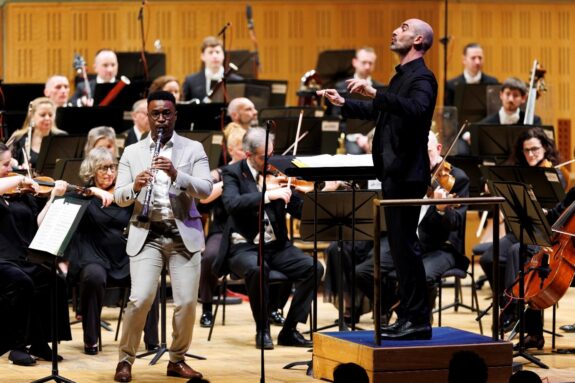
 Ireland Brahms, Weber: Carlos Ferreira (clarinet), National Symphony Orchestra Ireland / Peter Whelan (conductor). National Concert Hall, Dublin, 24.4.2026. (RB)
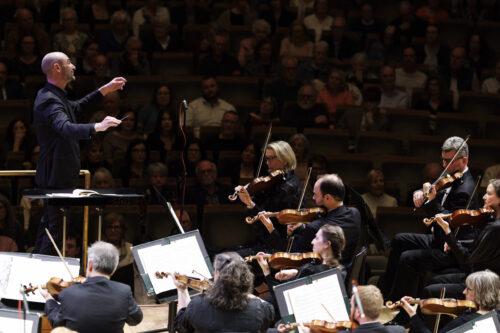
Brahms – Variations on a Theme of Joseph Haydn, Op.56a
Weber – Clarinet Concerto in F minor, Op.73
Brahms – Symphony No.4 in E minor, Op.98
The National Symphony Orchestra Ireland (NSOI) were joined by their Artistic Partner, Peter Whelan, for this programme of 19th-century music. Whelan has a background in early music, and, in his own programme notes, he drew attention to the influence of Baroque composers on Brahms. He highlighted Brahms’s use of the passacaglia in the finale to both his Haydn Variations and to his Fourth Symphony.
The concert opened with Brahms’s Variations on a Theme of Haydn. This work is Brahms’s first large scale composition for orchestra, and it is the first set of variations for symphony orchestra to remain in the repertoire. The theme, known as the St Anthony Chorale, was wrongly attributed to Haydn although Brahms does quote from Haydn’s ‘Clock’ Symphony in the finale. Whelan and the NSOI gave a very polished performance of this work. Whelan ensured Brahms’s textures remained transparent and light and there was scrupulous attention to detail including incremental use of dynamics. The variations were beautifully characterised and the NSOI were particularly impressive in the second variation with its Gypsy style rhythms, in the spirited fifth variation with its light woodwind and horn entries. Whelan allowed the tension to build incrementally in the final Passacaglia before driving the work to its joyous conclusion. While the quality of the playing was admirable throughout, there were one or two occasions where I would have liked to hear more of Brahms’s rich Romantic sonorities e.g. in the string textures of the second variation. Overall, however, this was a sterling performance and a great way to open the concert.
Weber’s First Clarinet Concerto was written in 1811, and it remains a cornerstone of the woodwind repertoire. In writing the work, Weber was influenced by the virtuoso clarinettist Heinrich Baermann who extended the technical possibilities of the instrument. Weber was primarily an opera composer, and he treats the clarinet like a soprano soloist performing melting arias, coloratura runs and wide leaps. The work is in the dark key of F minor which was associated with passion and melancholy in the early Romantic period.
Whelan and the NSOI joined force with the Portuguese rising star clarinettist Carlos Ferreira for this work. Whelan and the NSOI opened in subdued fashion with pizzicato strings before the full orchestra announced the imposing first subject. Ferreira negotiated the virtuoso demands of the first movement with consummate ease. He made the clarinet sing and deployed a wide range of dynamics and tonal contrasts to underscore the dramatic qualities in the music. The tone was even and consistent between registers and the coloratura runs and leaps were executed with virtuoso aplomb. The gorgeous singing tone returned in the Adagio second movement and Ferreira’s duet with the NSOI’s horns was a heart stopping moment. Ferreira’s performance of the finale was a delight. He captured the witty, playful quality in the music to perfection and showed immense finger dexterity. The coda was a triumphant virtuoso tour de force which succeeded in bringing the house down.
The final work on the programme was Brahms’s monumental Symphony No.4 in E minor. Brahms was notoriously self-critical and destroyed a significant amount of his compositions before they saw the light of day. He had serious misgivings about the Fourth Symphony before it was published but was persuaded by a group of close friends to stick with it. Initial reviews of the work were mixed, and Hugo Wolf made the notorious quip: ‘The art of composing without ideas has decidedly found in Brahms its worthiest representative’. Nowadays, most musical commentators regard the work as a masterpiece and one of the greatest symphonies to emerge from the 19th-century.
While there was some very fine playing from Whelan and the NSOI I had rather mixed feelings about this performance. The NSOI’s strings captured the wistful melancholic character of the opening movement with its sighing thirds and sixths. Whelan kept the textures admirably clear bringing out the inner string and woodwind lines although I lost the sense of the movement’s overarching structure as the movement progressed. The strings did a marvellous job building momentum and conjuring up tragic power in the final section of the movement. The adagio second movement (Andante moderato) opened well with the NSOI’s horns commanding attention. Some of the subsequent playing was a little too inward for my taste and I would have liked to hear Whelan and the NSOI exploit more of the expressive qualities of the music. Whelan adopted a fairly rapid tempo in the scherzo, and I enjoyed the muscular rambunctious quality of the music. The bright sonorities contrasted well with the more sombre thematic material in the other three movements. The opening variations of the finale had a dark driving intensity, and the contrapuntal writing was handled well. The central interlude was a little too relaxed and the music seemed to drift although Catriona Ryan played the haunting flute solo beautifully. The music caught fire again in the final set of variations and ended on a note of uncompromising defiance.
Very fine playing from Whelan and the NSOI and Ferreira is clearly a rising star on an upward trajectory.
Robert Beattie
Featured Image: Carlos Ferreira (clarinet), Peter Whelan (conductor) and the NSOI © Andres Poveda