
 United Kingdom Sally Beamish 70th Birthday Concert – Bach, Beamish, Respighi: Chris Stout (fiddle), Catriona McKay (Scottish harp), Michael Collins (basset clarinet), Academy of St Martin-in the Fields / Benjamin Marquise Gilmore and Michael Collins. St Martin-in-the Fields, London, 11.6.2026. (PC)
J.S. Bach – Brandenburg Concerto No.3 in G major with Slow Movement by Sally Beamish
Sally Beamish – IZAKHI: Concerto for Basset Clarinet and Chamber Orchestra (UK premiere); Seavaigers
Ottorino Respighi – The Birds
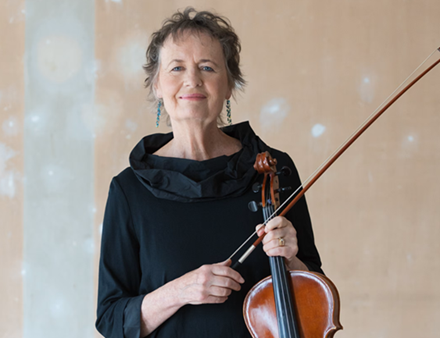
Sally Beamish has enjoyed a longstanding association with the Academy of St Martin-in-the Fields. She performed in the orchestra as a viola player in the 1980s, wrote several pieces for them and was their first composer-in-residence from 2018-2020. So, it was fitting that the ASMF gave a concert on 11 June in the elegant Georgian church in London’s Trafalgar Square from which the orchestra took its name in celebration of this versatile and free-spirited composer’s 70th birthday. There was a genuinely festive atmosphere throughout the evening’s music-making, which embraced warmth and intimacy as well as flair and virtuosity.
A fleet-footed, crisply articulated account of J.S. Bach’s Brandenburg Concerto No.3, led by first violinist Benjamin Marquise Gilmore, got proceedings under way with spirit and vigour. The account was distinguished by the inclusion of Sally Beamish’s Slow Movement at the heart of the work in place of the customary two-chord cadence. Fiddle player Chris Stout and Scottish harp player Catriona McKay joined members of the ASMF for this deftly scored piece which explored common ground between the Baroque idiom and traditional Scottish music, with their shared florid ornamentation and opportunities for improvisation. References to Bach’s writing and rapt cadenza-like passages for the soloists were skilfully woven into this eloquent and, at times, ecstatic, ballad-like movement. Chris Stout began to play as he was walking onstage and the natural spontaneity of this gesture established the performance’s fluent, liberating and freely expressive character. The impression created of two composers and two musics speaking to each other across the centuries was powerful and heartening, an authentic outcome of Sally Beamish’s inclusive approach to her craft.
The first half of the concert concluded with the UK premiere of Sally Beamish’s IZAKHI, a concerto for basset clarinet and chamber orchestra, in which Michael Collins was soloist and director. Written in response to an inspirational trip made by the composer to South Africa in 2024, the piece takes its title from a Zulu word meaning ‘elements’ or materials and the builders who use those resources. The work is based on the four elements associated with the clarinet, an instrument made of wood, with metal keys forged in a furnace, a reed from the river and activated by air. A notably wide-ranging percussion section, expertly handled in this performance by Cathrine Ring, assists in representing these elements, with bamboo windchimes, slide whistle and a polystyrene block for Air, xylophone and timpani strokes suggesting Earth, a waterphone, rainstick and frame drum filled with dried peas conjuring up a lack of Water and metal instruments, such as cymbal, thunder sheet, glockenspiel, side drum played with steel brushes evoking Fire.
‘Weaverbird’, the opening movement, is named after an African bird that builds nests out of reed and grass that hang on trees like baskets. The composer notated the weaverbird’s call, which was introduced by woodwind and soloist and woven throughout the rest of the movement. The concerto began purposefully as a ticking xylophone, an instrument which has its origins in Africa, established a regular heartbeat for the piece. At the movement’s core was an ear-catching, freely notated passage in which soloist and orchestral players evoked birdsong from the African savannah. Providing a satisfying contrast with the persistent, pulsing bassline that rooted the musical textures, the thematic material often included buoyantly ascending lines and the movement ended with another steadily rising figure, gently taking wing.
The second movement, ‘Cradle’, was inspired by a visit by Beamish to the ‘Cradle of Humankind’ museum near Johannesburg. The music was partly inspired by Bantu a cappella choral singing and took the form of a chaconne. It began with a resolute wind chorale, capped by the solo line. A more relaxed central passage featured lively interplay between the soloist, xylophone and pizzicato strings. The final section had the solace of a lullaby and incorporated a sequence where the timpani played with the hands, representing direct contact between human and animal skin. In the closing bars, the opening chorale reappeared, noble and sonorous.
The third movement, ‘Thirst’, was concerned with drought and parched landscapes. It began with a striking solo for bowed waterphone, whose resonant strokes evoked the haziness of warm air. These eerie reverberations were presently accompanied by clarinet multiphonics before there unfolded a mournful air for the soloist, accompanied by dry pizzicato strings. Michael Collins brought a wistful, supplicatory quality to his wide-ranging solo lines, making this movement an affecting span of stillness and devotion.
After the dryness of ‘Thirst’ came the finale, ‘Wildfire’. The movement began haltingly, slowly gathering momentum before the obsessively driven main section unleashed a vivid depiction of uncontrollable flames. After this frenzied activity eventually subsided, the closing section began with a lament in the form of a deeply felt cadenza-like duet between soloist and timpani. This was succeeded by the chorale from ‘Cradle’, over which the soloist played the air from ‘Thirst’. Above returning xylophone strokes first encountered at the start of the work, the call of the weaverbird was heard once again in the final bars, offering a sign of hope and ending the concerto with an aptly intimate, cyclical gesture.
Ably fulfilling the roles of soloist and director, Collins had the full measure of IZAKHI. His final, sustained note brought a superbly controlled diminuendo, ensuring the piece faded imperceptibly into silence, a spellbinding stroke that concluded a performance of rare insight and responsiveness that took full advantage of the extended expressive range afforded by the solo instrument. The playing of the ASMF was equally committed, serving to secure a memorable UK concert debut for this haunting, multifaceted work.
After the interval, soloists Chris Stout and Catriona McKay returned to the stage with members of the ASMF to perform Sally Beamish’s Seavaigers, for fiddle, Scottish harp and strings (2011). The title references the seafaring people of the North Sea and piece captured the thrill and the dangers of sea voyaging. The opening movement, ‘Storm’, consisted of an evocation of dawn over the water and then a reel that contained baleful, shadowy elements before a hopeful resolution. Marking seafaring tragedies, the central ‘Lament’ was an ardent threnody, restated with various embellishments, some of them improvised. The spirited finale, ‘Haven’, headed for home with exuberance. A moment near the closing bars when the opening music is briefly recalled as if catching sight of land, was especially poignant. Seavaigers brings together Scottish folk music and the classical concerto form in a work that is immediately engaging and also ruminative and elegiac. The players savoured the score’s nuances and layers and responded to the narrative’s improvisatory episodes instinctively and with imagination, drawing an enthusiastic response from the audience, which was well deserved.
There followed an unscheduled encore in the form of Catriona McKay’s Swan LK243, the name of this tuneful short piece deriving from a fishing boat built in Shetland in 1900. The melody is a favourite of Sally Beamish and the duo’s affection for her was evident in their impassioned, generous-hearted playing, its reciprocation equally clear from the composer’s touched response.
The concert was rounded off by a sparkling and vividly characterised reading of Respighi’s The Birds, led by first violinist Benjamin Marquise Gilmore. A recording of this work was among the first Sally Beamish made as a member of the ASMF in the mid-1980s and its use of music by composers from earlier times and incorporation of birdsong made a profound and lasting impression on her. The performers made the most of this colourful, effervescent suite, gleefully imitating chirps, cuckoos and fluttering wings to bring their birthday salute to a joyous conclusion.
Paul Conway